Outdoor & Garden Lighting: Lighting Your Backyard the Right Way
Good backyard lighting is about layers, not lumens. If you light a garden well, you barely notice the fittings at night — you notice that the paths feel safe, the entertaining area feels warm, and a couple of nice plants or trees quietly stand out. This is a practical guide to lighting an Australian backyard the right way: how to layer light, what colour temperature to choose, the difference between solar, low-voltage and hardwired options, and the point where the job stops being a weekend project and becomes work for a licensed electrician.
Lighting layers: path, feature, task and ambient
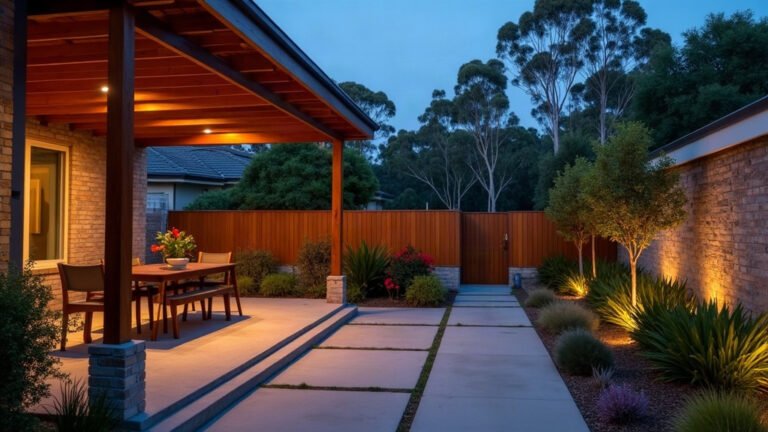
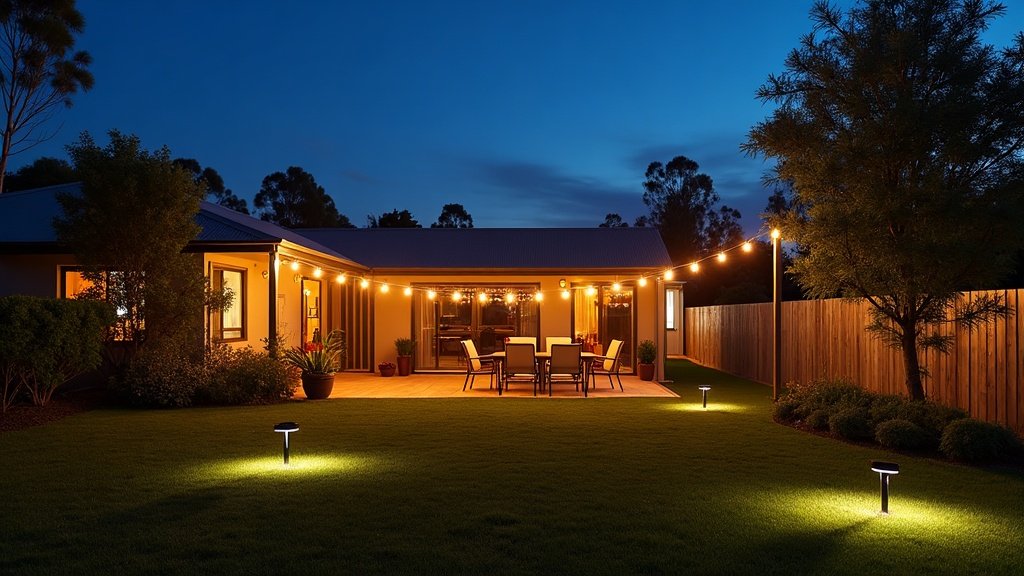
The quickest way to make a yard look amateurish is to flood it with one harsh light. Instead, think in layers. Path lighting keeps walkways, steps and edges safe to move along after dark. Feature lighting picks out a tree, a wall or a planted bed so the garden still has shape at night. Task lighting covers the spots where you actually do things — the BBQ, the back door, the steps. Ambient lighting is the soft, general glow that makes a seating area feel like somewhere you want to sit.
You rarely need all four at full strength. A small courtyard might only want path lights and a bit of ambient string lighting. A larger yard benefits from a feature light or two so the eye has something to land on. Start with where people walk and sit, then add feature light last.
Warm vs cool light and why it changes the whole mood
Colour temperature does more for the feel of a yard than brightness. Warmer light tends to read as relaxed and inviting, which is usually what you want around an outdoor table or seating area. Cooler, whiter light reads as crisp and functional, which can suit a work zone or a security light but feels clinical over a dinner.
As a rule of thumb, keep the entertaining and ambient layers on the warmer side, and only reach for cooler light where you genuinely need clarity. Mixing wildly different tones across one small yard is the thing that looks off, so try to keep your warm zones consistent.
Solar vs low-voltage vs hardwired — pros and trade-offs
Solar lights are the easiest to live with: no wiring, no running costs, and you can move them as the garden changes. The trade-off is that output depends on how much sun the panel actually catches during the day, so a shaded corner under a tree may never charge well. They suit path edging and gentle accenting more than serious task light.
Low-voltage (plug-in) systems run off a transformer that plugs into an existing outdoor power point, stepping mains down to a safer low voltage for the garden run. These are generally considered DIY-friendly because the garden-side cabling is low voltage, and they give you more consistent, controllable light than solar. They are a good middle ground for paths, beds and feature lighting.
Hardwired lighting — anything wired into your mains supply — gives the most reliable, permanent result, but it is not a DIY job. More on that below.
Festoon and string lighting for the entertaining zone
Festoon and string lights are the easiest win for an entertaining area. Strung above a table or pergola, they throw soft overhead ambient light that instantly makes the space usable at night. Plug-in festoon sets are straightforward to put up yourself.
A few practical notes: make sure anything you use outdoors is actually rated for outdoor use, support the run properly so it does not sag onto people or furniture, and keep leads and connections up off wet ground. If you are running power across the yard to reach the spot, use a weatherproof outdoor-rated lead rather than an indoor extension cord.
Weatherproofing and IP ratings (the bit people skip)
Outdoor fittings carry an IP (Ingress Protection) rating that describes how well the fitting resists dust and water. The higher the water figure, the more exposure the fitting is built to handle — a sheltered spot under a pergola is a very different ask from a fitting sitting out in the open getting rained and sprinkled on.
Rather than chasing a specific number, match the fitting to the position: more protection for exposed, in-ground or near-pool locations, less for covered areas. Check the rating printed on the product and on its packaging against where you plan to install it, and follow the manufacturer’s guidance. The mistake people make is using an indoor-grade fitting outside because it looked nice in the shop.
Where DIY stops: hardwired lighting and garden power
Solar lights, plug-in festoon sets and low-voltage garden kits are fine to set up yourself. Anything that involves fixed or hardwired electrical work is not. In Australia, fixed wiring, adding or altering circuits, installing new outdoor power points, and hardwiring light fittings into the mains must be done by a licensed electrician — it is both a safety and a legal requirement, and getting it wrong around a wet outdoor environment is genuinely dangerous.
So if you want permanent wall lights, in-ground uplights wired to the mains, a new weatherproof power point near the entertaining area, or a switchable garden lighting circuit, that is the point to call a professional. A licensed electrician such as ELECTRX Electricians can install hardwired garden lighting and outdoor power safely and to standard, including the weatherproofing and protection those circuits need. Sketch out what you want lit and where the power needs to land, and let them spec the fixed wiring — you can still handle the solar and plug-in layers yourself.
Lit well, a backyard doesn’t need much: a safe path, a warm pool of light over the table, and one or two features picked out of the dark. Start with the layers you can do yourself, keep the warm zones consistent, match every fitting to its exposure, and bring in a licensed electrician for anything hardwired.