
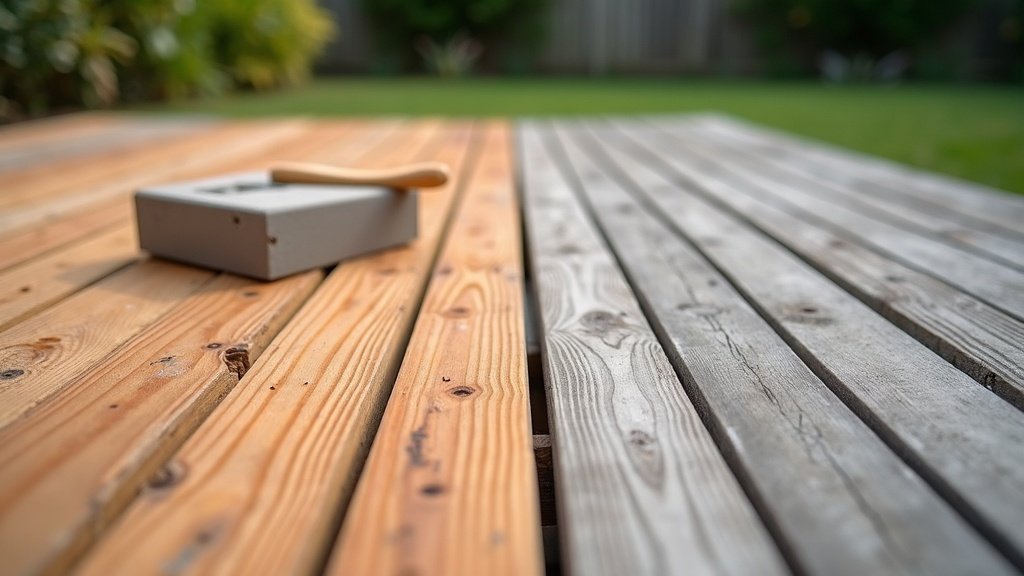
Reviving a Timber Deck: Cleaning, Sanding and Refinishing Without Wrecking It
Most tired old decks do not need pulling up. Nine times out of ten a grey, splintery deck just needs a proper clean and a fresh coat, and it comes back looking close to new. The trick is getting the prep right so you are feeding the timber, not sanding the life out of it.
First, work out whether it is a revive or a replace job
Before you buy a drop of oil, get down on your knees and actually look at the boards. A deck that has gone grey on top is almost always fine underneath. Grey is just sun-bleached surface timber, not rot. What you are checking for is the stuff a coat of oil can never fix:
- Soft, spongy boards: if a screwdriver sinks into the timber under light pressure, that board is rotten and needs replacing, not coating.
- Movement underfoot: a bounce or a sag usually points to a joist or bearer problem below, which is a structural job, not a finish job.
- Popped or rusted fixings: a few lifted nails or screws are an easy fix, but widespread rust staining can mean the frame is on its way out.
If the frame is solid and the boards are just weathered, you are in revive territory, which is the cheap end of the job. If you are tackling the whole yard, it pays to plan it as connected zones, the way we set out in our guide to Aussie outdoor living.
Start with a proper clean, not the sander
Reaching for the sander first is the wrong move. Half the grey you are staring at is mould, dirt and old coating, not the timber itself, so a good wash brings back more colour than you would expect.
Sweep the whole deck, then get into the gaps between the boards with a paint scraper or an old chisel, because that is where leaves and grime pack in and hold water against the timber. Wash it down with a deck cleaner suited to your boards and follow the product’s own dilution and dwell times, since they vary between brands. Then let it dry out completely before you go any further, usually a couple of warm days, because oil will not take on damp timber.
Light sanding: knock the fuzz off, do not dig in
Once it is clean and bone dry, a light sand smooths the raised grain and old splinters so the finish sits evenly. The word to hold onto is light: you are not stripping the deck back to raw timber, just taking the fuzz off the top.
- Go with the grain: sanding across the boards leaves scratches that jump out the second you oil them.
- Use a medium grit: too coarse and you gouge the soft spots, too fine and it will not key the surface for the oil.
- Do the high-traffic bits by hand: doorways and the tops of steps wear faster, so a quick hand sand there evens everything out.
Vacuum or blow the dust off, because any grit left behind ends up trapped under the finish and you will feel it underfoot.
Oil or stain: what actually holds up underfoot
This is where a deck is different from a fence. A timber fence just has to look good and shed water, but a deck gets walked on and cops rain and sun all year, so the finish has to be tough and easy to top up.
- Decking oil: soaks into the timber, keeps that natural look, and is dead easy to recoat because you do not have to strip anything back. It wears thin over time instead of peeling, which is exactly what you want on a floor.
- Decking stain: adds more colour and a bit more surface protection, sitting between an oil and a film.
- Film finishes and paints: they look great on day one, but foot traffic chips and peels them, and then you are straight back to sanding. Most people are happier with an oil on a deck they actually use.
Whatever you land on, follow the coverage and drying times on the tin rather than any rule of thumb, because they change with the product and the weather. Do thin coats, let each one dry, and never flood it on.
Slip, water and the gaps between boards
A freshly oiled deck can be slippery when it is wet, especially in shade where mould creeps back in. If the deck sees a lot of wet feet, near a pool or under a downpipe, look for a decking oil with some grip in it and keep the surface clean so algae does not build up.
The other thing people forget is drainage. Those gaps between the boards are there on purpose, to let water fall through and the timber breathe. Keep them clear of leaves and muck, because a deck that stays wet underneath rots from below no matter how tidy the top looks.
When to hand it to a pro
Plenty of decks are a good weekend job. Some are not. It is worth getting a professional in when:
- The deck is high or elevated: working at height on a raised or second-storey deck carries a real fall risk that is not worth taking to save a few hundred dollars.
- The frame looks suspect: soft boards, movement or rusted-out fixings are a builder’s or carpenter’s call, not a finishing job.
- It is a big area on a tight timeframe: a large deck is a lot of hands-and-knees work, and a pro with the right gear will finish it faster and more evenly.
For the honest revive job though, a solid frame, a good clean, a light sand and a couple of thin coats of oil, most people can knock it over on a dry weekend and buy the timber years of extra life. Do it before the boards go too far, and you dodge the far bigger cost of replacing the lot.