Pool Fencing in Australia: What Every Backyard Pool Owner Should Check
If you have a pool in the backyard, the fence around it is not decoration and it is not optional. It is the one thing standing between a wandering toddler and the water, which is exactly why Australia takes pool-barrier law more seriously than nearly anywhere else. The short answer to “what should I check”: your pool needs a compliant safety barrier, the gate has to close and latch on its own every time, and nothing climbable can sit near the fence. The exact measurements are set by your state and enforced by your local council. Here is what actually gets looked at, and how to know your barrier is doing its job.
Why the rules are so strict here
Drowning is fast, silent and preventable, and it is a leading cause of accidental death in young Australian children. That is the whole reason the law exists. A pool-safety barrier is there to keep small kids out of the pool area when no adult is watching, even for the thirty seconds it takes to answer the door. Every state and territory has its own pool-safety legislation, and most of them draw on the Australian Standard AS 1926.1 for how a barrier should be built and maintained. The fine print differs from place to place, but the goal is identical across the country: a barrier a young child cannot climb over, squeeze through or open by themselves.
What a pool-barrier inspection actually looks at
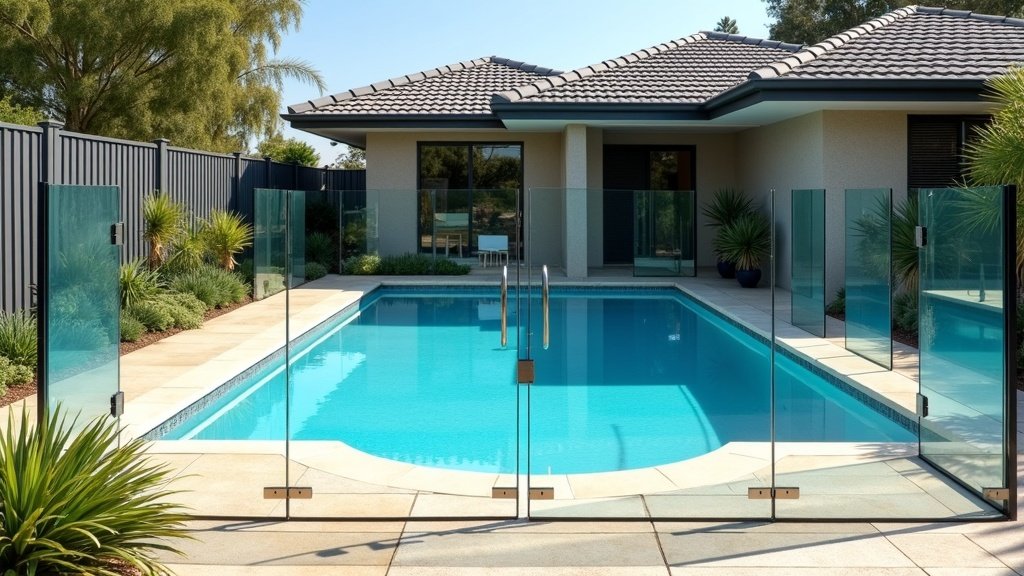
When a registered inspector checks a barrier, they are not being fussy for the sake of it. They are working through every way a determined toddler gets past a fence. Broadly, they look at:
- Barrier height and gaps: whether the fence is tall enough, and whether the gaps at the bottom, the top and between the verticals are small enough that a child cannot get over or through.
- The gate: whether it swings away from the pool and closes and latches by itself from any position you let it go.
- The non-climbable zone: whether there is anything near the fence, inside or out, that a child could use as a foothold.
- Boundary and dividing fences: where a neighbour’s fence doubles as part of the pool barrier, whether it still meets the rules.
- Doors and windows: whether anything from the house opens straight into the pool area, which generally is not allowed without extra measures.
I am deliberately not quoting heights and gap sizes here, because those numbers are set by your state’s current rules and they do get updated. Your inspector measures against the standard that applies where you live, today.
Why the rules depend on where you live
This is the bit that catches people out. Pool-fencing law is state and territory law, not one national rulebook, and councils administer it locally. A barrier that was signed off years ago is not automatically compliant with today’s requirements, and the rules for a pool built before a certain date can differ from those for a brand-new one. So “my mate’s pool passed, so mine will be fine” is not a safe bet. The only rules that count are the current ones for your address, confirmed by your council or a licensed pool-barrier inspector.
Gates and latches: where most pools come unstuck
Ask any inspector where pools most often fail and the answer is the gate, not the fence panels. Latches wear, hinges sag, springs weaken, and one day the gate that used to swing shut and click now needs a nudge to catch. A pool gate has to close and latch on its own, every single time, from any position. Propping it open with a pot or a brick for an afternoon of gardening defeats the entire barrier. Same story with anything stacked near the fence: an esky, a planter, a stack of pavers, even the pool-pump housing. If a child can climb it to reach the top of the fence, it has no business being there.
Signage and staying compliant over time
Most areas require a resuscitation (CPR) sign displayed in the pool area, kept legible and current, because CPR guidance itself changes over time. Beyond the sign, compliance is not a one-off tick. Timber shrinks, latches corrode in coastal air, kids drag play gear up against the fence, and a new garden bed can quietly turn into a foothold. It pays to walk the barrier yourself every few months: shut the gate from a few different positions and check it latches on its own, look for gaps that have opened up, and clear anything climbable back from the fence line.
How to actually confirm your pool is compliant
Do not guess, and do not lean on memory or a neighbour’s say-so. To be sure:
- Check your state or territory’s pool-safety rules and your council’s requirements, since registration and inspection steps vary.
- Book a licensed or registered pool-barrier inspector to measure against the current standard.
- Fix anything flagged before you fill or use the pool, not after.
- Keep the paperwork: many areas require a compliance certificate, and you will need it when you sell or lease.
A pool is one of the best things about an Australian backyard, and a barrier that quietly does its job is what lets you relax by it instead of watching it. If you are planning the wider space around the water, our guide to planning an Aussie outdoor living area walks through how the pool, fences and entertaining zones fit together.