Outdoor Showers: Siting, Drainage and Hot Water Options for the Backyard
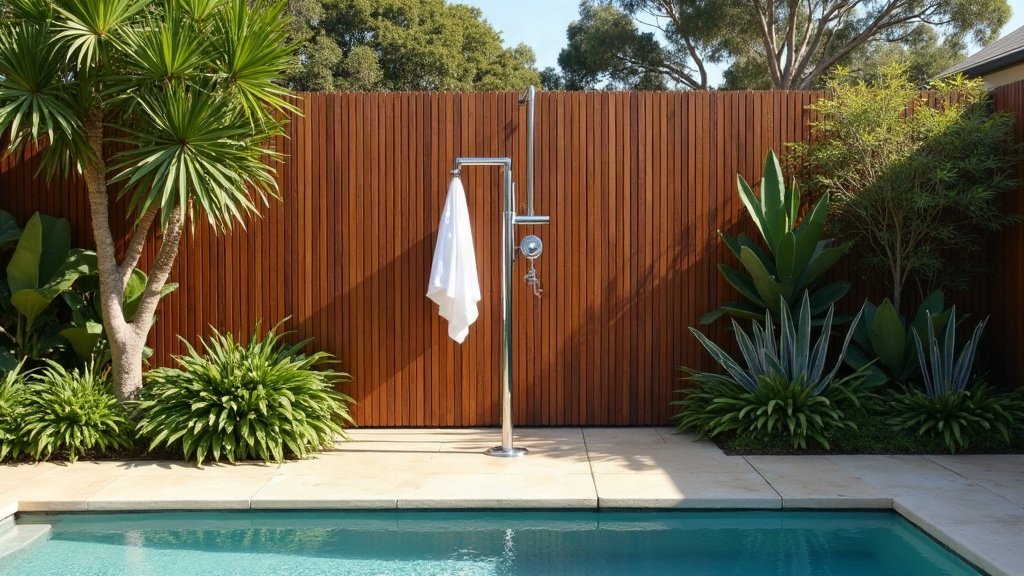
Put an outdoor shower where people actually come in from: the path between the pool or beach gear and the back door, on a hard floor that can drain, with some screening and a bit of afternoon sun. Then sort out where the water goes before you fall in love with a fitting. Drainage is the part that turns a weekend idea into a plumber’s job.
Where should an outdoor shower go?
Start with the traffic. If the kids drip straight from the pool gate to the laundry door after a swim, the shower belongs on that line, not tucked behind the shed where it looks nice in a photo.
Then check these on site:
- Sun: a spot that gets afternoon sun dries out between uses, so you get less slime on the floor and less mould on the screen.
- Wind: a cold southerly through a shower makes it a summer-only fixture. A wall or a solid screen on the windward side extends the season.
- Privacy: stand where the shower would go and look for neighbours’ windows and second storeys. A screen that blocks the view at head height usually does the job.
- Walls and timber: spray hits whatever is next to it. Keep the rose clear of weatherboards, window frames and untreated timber, or line that wall with something that copes with water.
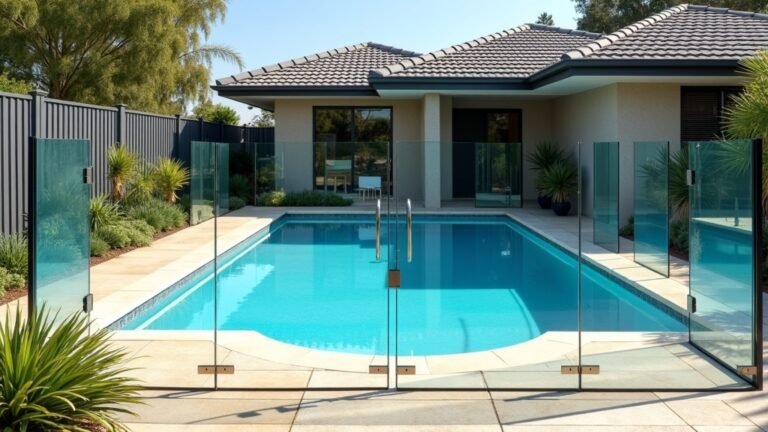
If the shower is near a pool, think about the fence too. A shower post, a tap or a bench close to the barrier can give a small child something to climb. Check the rules for your state before you lock in a position; our guide to what to check on a pool fence covers where to look. For screening ideas that suit a shower, see our backyard privacy screening guide.
Where does the water go?
Shower water counts as wastewater, not stormwater. Hunter Water explains the difference plainly: stormwater is rain off roofs and paving that flows untreated into creeks, rivers and the ocean, while wastewater from showers, sinks and toilets goes through the sewer to a treatment plant (Hunter Water, Understanding the stormwater network).
Soap, shampoo and sunscreen all go down an outdoor shower drain, so don’t assume it can run into the stormwater pit or out onto the lawn. Whether yours can go anywhere other than the sewer depends on your local water authority and council rules. Ask your plumber what applies to your property before the floor goes down.
The floor needs a fall towards a floor waste, so water doesn’t pool or run back towards the house. Pavers, a concrete slab or a hardwood deck over a waterproofed base all work. A loose pile of river pebbles over bare dirt doesn’t, unless your plumber has signed off on where that water ends up. If your yard already holds water after rain, read our guide to fixing a soggy backyard first; a shower adds water to the problem.
Cold only, or hot as well?
Cold only is the simplest setup, and for rinsing salt and chlorine off after a swim in January, it’s plenty.
If you want to use it outside summer, or to wash the dog without freezing your hands, you’ve got three common routes:
- Tee off the house hot water: usually the neatest option when the shower sits close to an existing hot line. Long pipe runs mean waiting for the hot to arrive.
- A separate heater near the shower: handy when the house system is on the far side of the block. It needs plumbing work, and a hard-wired electric unit adds electrical work too.
- Solar or portable: a black solar bag or a portable unit off a hose is fine for camping-style rinses, with no fixed pipes and no plumber.
Whatever heats it, the water at the rose has to be safe. In Queensland, residential hot water storage must be heated to at least 60°C to control bacteria such as Legionella, and a temperature control device must deliver it to taps at no more than 50°C. That device is required on all new and replacement hot water systems (Business Queensland, Hot water systems). Other states set their own rules, so your plumber should confirm what applies where you live.
What can you do yourself?
Brisbane City Council lists replacing a shower head as unregulated work you can do without a licensed plumber, and says permit work must be done by a licensed plumber or drainer (Brisbane City Council, Plumbing and drainage). New supply pipes and a new drain connection aren’t on that unregulated list. If you’re outside Queensland, ask your plumber what applies.
So the DIY share of an outdoor shower is mostly the carpentry and landscaping: building the screen, laying the pavers to the levels your plumber gives you, planting around it. In Brisbane, that leaves the supply pipes and the drain connection to a licensed plumber or drainer.
Lighting is worth planning at the same time. If you’ll rinse off after dark, a hard-wired light over the shower means wiring near water, and that’s a licensed electrician’s job; our post on outdoor wiring, DIY versus electrician covers why. In Melbourne, ELECTRX’s outdoor lighting electricians install garden and pool lighting with weather-rated, IP-rated fittings.
Small details that make it work
- A hook and a shelf: somewhere to hang a towel and park the shampoo, out of the spray.
- A tap you can reach: mount the mixer or tap where you can turn it on without standing under the rose.
- Non-slip underfoot: wet tiles and smooth pavers get slippery. Pick a textured finish.