Mulching the Garden: Which Mulch, How Deep, and When
Mulch is the cheapest, fastest upgrade you can make to a garden bed, and most people either skip it entirely or pile it on wrong. Get the type, depth and timing right and you’ll water less, weed less, and your soil will thank you for it through a long dry summer. Get it wrong and you can actually smother plants or invite rot.
Why mulching matters more here than almost anywhere
Australian gardens deal with harsh sun, long dry stretches and soil that dries out fast once it’s exposed. A layer of mulch acts like a blanket over the soil surface. It slows evaporation, keeps roots cooler on a 40 degree day, and stops the sun from baking the top layer into a hard crust that water just runs off instead of soaking in.
It also does the boring but valuable job of smothering weed seeds before they get light to germinate, which means less time on your knees pulling them out later. As organic mulch breaks down, it feeds soil life too, so you’re improving the ground under your feet at the same time as protecting what’s growing in it.
Organic vs inorganic: which one for which job
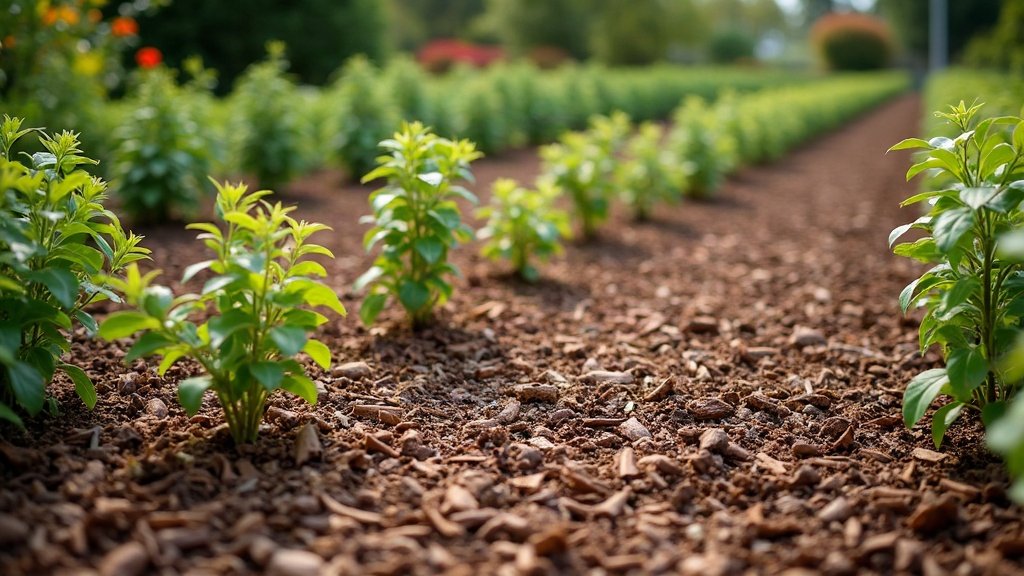
Organic mulches break down over time and feed the soil as they go. That’s what you want under shrubs, in vegie beds and around trees.
- Bark chip: breaks down slowly, holds its look for a long time, and suits garden beds under trees and shrubs where you don’t want to top up often.
- Sugar cane mulch: breaks down quickly and is popular in vegie patches because it feeds the soil fast and is easy to spread by hand.
- Pea straw: similar to sugar cane, good for vegie beds and roses, and adds nitrogen back into the soil as it rots down.
- Woodchip: chunkier and longer lasting than bark, good for larger garden beds and around established trees where a coarser look works fine.
Inorganic mulches like pebble, scoria or gravel don’t break down and don’t feed the soil, but they’re the better call for paths, driveways and any spot where you don’t want organic matter attracting termites close to a structure. They’re also lower maintenance since there’s nothing to top up each year, though they do less for soil health.
How deep is deep enough
A good general guide for organic mulch in garden beds is somewhere around 5 to 10 centimetres. Thinner than that and weeds punch straight through, sunlight still reaches the soil, and you lose most of the moisture benefit. Pile it on much thicker than that, particularly with finer mulches, and you can actually stop water and air getting through to the soil at all.
The bit almost everyone gets wrong is piling mulch straight up against a trunk or plant stem. That’s often called a mulch volcano, and it’s a real problem. Constant moisture trapped against bark encourages collar rot and gives pests somewhere to hide right at the base of the plant. Leave a gap of a few centimetres of bare soil around every trunk and stem, then build the mulch layer out from there.
When to mulch to actually save water
Timing matters as much as depth. The best time to lay mulch is when the soil is already moist, not bone dry, so you’re locking existing moisture in rather than sealing dry soil off from the next lot of rain. In most parts of the country that means mulching going into spring or early summer, before the heat really sets in, so the bed is protected before you need it most.
If your soil is already parched when you get around to mulching, give it a deep water first. Laying mulch over dry ground doesn’t magically add moisture, it just holds on to whatever’s already there, so start with a decent soak.
Topping up vs starting fresh
Organic mulch breaks down over months, and how fast depends on the type and your climate. As a rough guide, once it’s thinned out, gone grey and patchy, or you can see bare soil coming through again, it’s time to top up. You usually don’t need to strip the old layer off first. Rake it around a bit to break up any matting, then add fresh mulch on top to bring it back to that 5 to 10 centimetre depth.
If the old mulch has gone slimy, smells off, or has a lot of fungal growth through it, that’s a sign it’s sat too wet for too long. In that case it’s worth pulling the worst of it out rather than just burying the problem under a fresh layer.
Mistakes that undo all the good work
- Mulch volcanoes: piling mulch up against trunks and stems, which traps moisture and invites rot.
- Using the wrong mulch near a house: some organic mulches close to timber structures can be a termite concern, so check with your local council or a licensed pest professional about what’s recommended in your area before mulching right up against a building.
- Mulching bone dry soil: it looks tidy but does nothing for moisture retention until you’ve watered properly first.
- Going too thin: a token scattering of mulch lets weeds through and barely slows evaporation at all.
- Ignoring drainage: mulch that sits in a spot that never dries out will eventually turn sour and start smelling, especially finer organic types.
None of this is complicated once you’ve done it once. Pick an organic mulch for garden beds and vegie patches, keep it off the trunks, lay it around 5 to 10 centimetres deep while the soil’s still moist, and top it up when it starts looking tired. That’s most of the job done, and your garden will handle the next heatwave a lot better for it.