Outdoor Blinds and Shade Sails: Choosing UV Protection for Your Patio
Most patio shade decisions come down to one question: sail, outdoor blinds, or an awning? All three cut UV and drop the temperature underneath. They are not interchangeable, though, and the right answer depends far more on the shape of your patio and the direction your sun comes from than on what looked good in the showroom.
Three products, three different jobs
Shade sails cover open space from above. Outdoor blinds close in the sides of a space that already has a roof. Awnings project out from a wall to make shade where there was none. Pick the wrong one and you’ll shade the ground at noon and still cop full sun across the table at four in the afternoon.
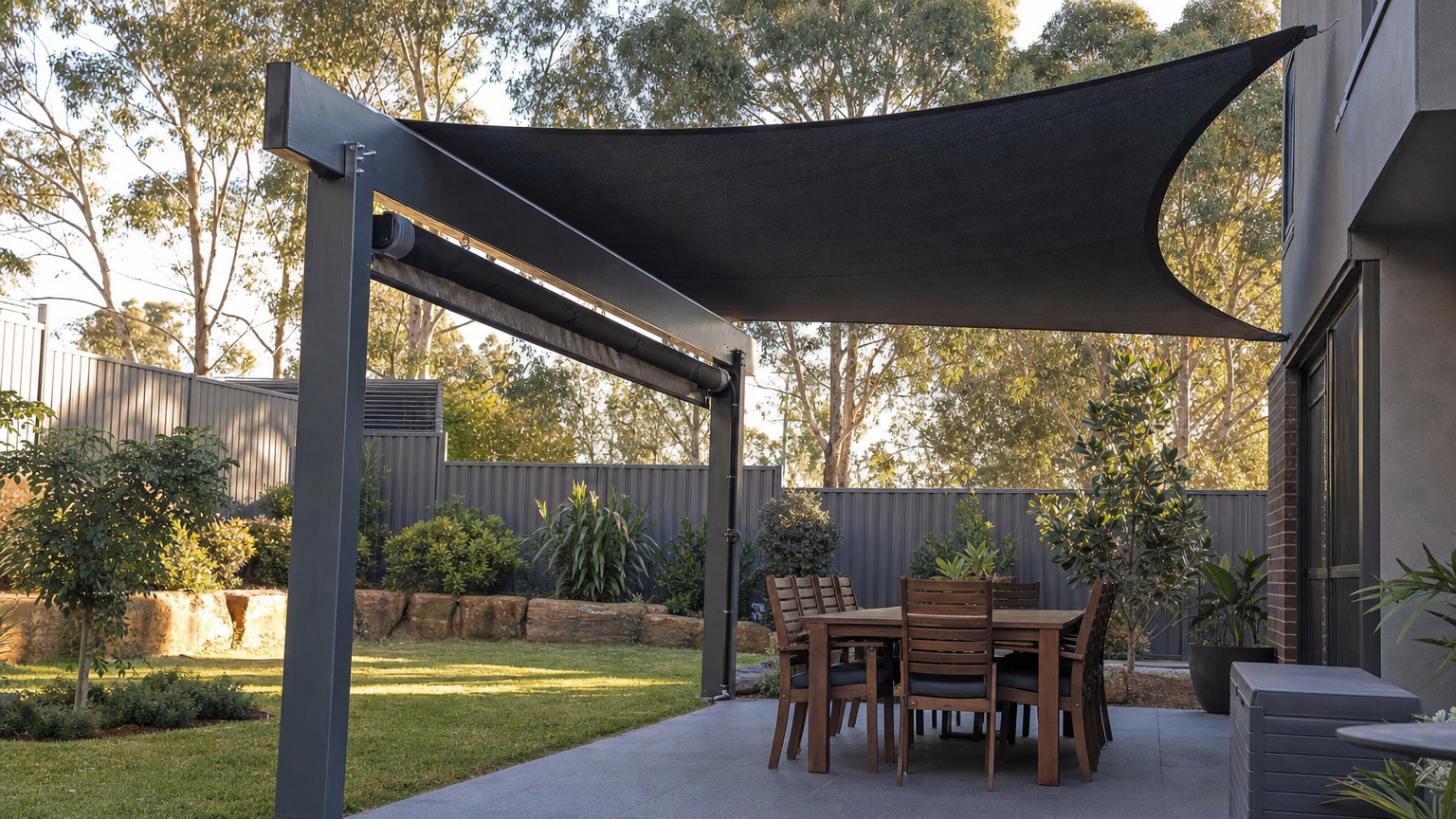
A sail is tensioned fabric stretched between fixed anchor points: posts, wall brackets, or existing structure. It handles overhead sun beautifully and does almost nothing about low western sun. Outdoor blinds are the opposite. They drop vertically from a pergola beam or patio edge, which makes them the strongest of the three against low sideways sun, and the only one that also holds off wind and driving rain.
Awnings sit in between. A retractable awning fixed to the house gives you shade on demand over a paved area with no roof, then folds away when you want the winter sun back. That last part matters more than people expect. Permanent shade over a north facing living area is a mistake you feel every July.
Head to head: where each one wins
Here’s the short version of what each option is good at:
- Shade sails: best over open lawn, a pool surround or an unroofed paved area, where the sun is overhead and you want to span a wide area without much structure.
- Outdoor blinds: best on a patio or pergola that already has a roof, where the real problem is low afternoon sun, wind, or rain blowing in from one side.
- Retractable awnings: best against a wall with no posts and no roof, where you want shade some days and full sun on others.
- Fixed awnings and louvre roofs: best where you want an all year structure and are willing to treat it as a building job rather than a soft furnishing.
One more distinction worth knowing. Sails and awnings shade the area. Blinds shade the people. If your complaint is that nobody can sit out there after three o’clock, blinds fix that and a sail usually won’t.
Fabric does most of the UV work
The frame holds it up, but the fabric decides how much UV gets through, how hot it feels underneath, and how many summers you get before it goes chalky and starts to sag. Ask for the manufacturer’s stated UV block rating on the exact fabric and colour you’re ordering, not the headline figure for the range. Those numbers shift with colour and weave.
As a rule, a denser weave blocks more UV and more light. Darker colours cut glare better and tend to absorb heat rather than bounce it, so a dark sail can feel cooler underneath even though the fabric itself runs hot. Pale colours reflect more, and on a light coloured patio floor they can throw glare straight back at you. Check the fabric warranty separately from the installation warranty, too. They’re rarely the same length.
Mesh, canvas or clear PVC
Knitted shadecloth mesh breathes. Hot air escapes up through it instead of pooling underneath, which is why a mesh sail feels cooler than a solid roof of the same size. It won’t keep you dry in rain.
Solid canvas and acrylic fabrics stop sun and rain both, but they need a proper fall built in so water runs off instead of sitting in the middle. A solid sail sagging with a bathtub of water in it is how anchor points get torn out of walls.
Clear PVC blinds are a different tool again. They hold off wind and rain while keeping the view, which is useful on an exposed or coastal patio. They do very little for heat. Drop clear PVC down a west facing patio in February and you’ve built a greenhouse.
Matching it to your actual patio
Work out where the sun lands and at what time, then choose. A roofed alfresco that bakes from three o’clock onward wants blinds on the western side and nothing else. An open paved entertaining area with no roof and no wall to fix to wants a sail on proper posts, footed in concrete. A courtyard tight against the house with no room for posts wants a retractable awning.
Two things to sort out before you order. If the structure is fixed and permanent, check with your local council whether it needs approval, because that depends on the council and on how the structure gets classified. And if any part of it lands near a pool, check the position against your state’s pool barrier requirements first, since anything climbable or anything that changes the barrier’s clearances can put a compliant fence out of compliance.
The bottom line
Solve your specific sun problem first, then spend the extra money on fabric and fixings rather than on size. A modest sail in good cloth on properly footed posts will outlast a big one in cheap fabric screwed into a fascia board.