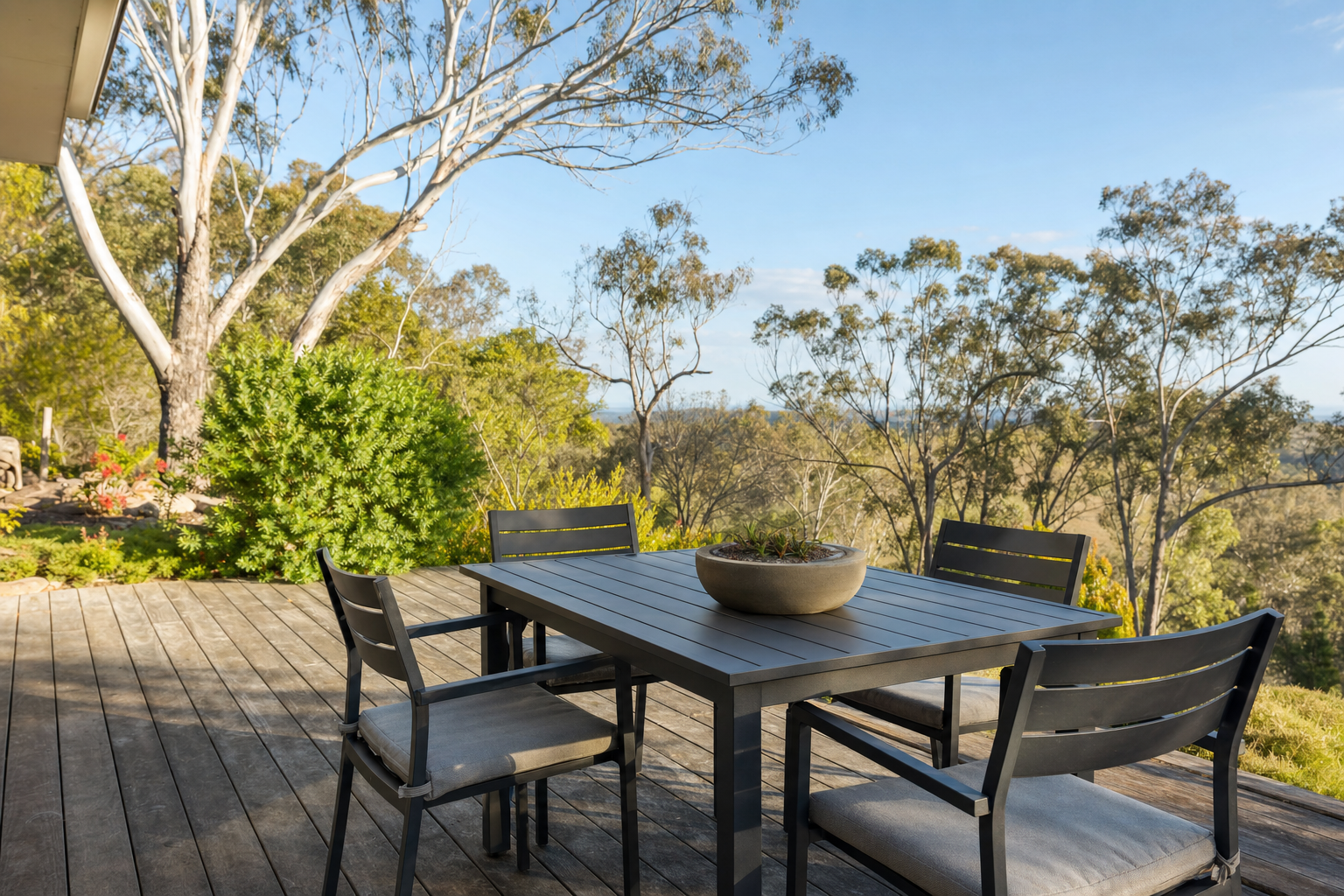
Choosing Outdoor Furniture That Survives the Australian Climate
Outdoor furniture rarely fails because it was cheap. It fails because it was the wrong material for the exact spot it ended up sitting in. Full western sun wrecks fabric and thin plastic. Coastal air chews through untreated steel. A damp, shaded corner grows mould on timber that would have been happy out in the open. Work out what your backyard does to things first, then pick the material to suit.
Heads up: one link in this article goes to a product on Amazon, and we may earn a small commission if you buy through it, at no extra cost to you. We only point at gear we would use ourselves.
First, work out what your yard throws at it
Stand where the setting will live and look properly at four things.
- Sun: how many hours of direct sun does that spot cop, and is it the harsh westerly afternoon or gentler morning light? UV kills cushions, cheap plastics and unprotected timber.
- Salt: if you can smell the ocean, salt is landing on your furniture, and it punishes screws, hinges and fixings long before it touches the frame.
- Water and shade: a spot that stays wet and shaded after rain is a mould problem. Under trees you also collect sap and bird mess that stains if you leave it.
- Wind: light chairs in an open yard end up in the pool. Weight becomes a feature.
The materials, warts and all
Powder coated aluminium
The safest all rounder, and the obvious pick anywhere near the coast. Aluminium cannot rust the way steel does, so a chip in the powder coat does not turn into a spreading orange stain. It is light enough to move for a clean, which also means the very light stuff skates around in a gusty yard. Check the welds rather than the brochure, because a good frame with a lazy weld still wobbles after a season.
Timber
Timber ages beautifully and feels better to sit on in the heat than metal ever does. Teak is the benchmark because its natural oils shrug off water, and if you let it go it weathers to a soft silver grey with no loss of strength. Cheaper eucalyptus and acacia settings look similar on the showroom floor but want a coat of oil about once a year to stay sharp. Whatever the species, check the fixings: brass or stainless bolts hold up, plain steel ones bleed rust stains down the legs within a couple of wet seasons.
Steel
Heavy, stable and great in the wind, and it holds a much finer looking frame than aluminium can. The catch is that every scratch through the coating is a starting point for rust. Galvanised or properly powder coated steel is fine well away from the beach if you touch up chips as they appear. Within salt spray range it is a fight you will lose, and if you buy it anyway, marine grade 316 stainless fixings are worth the extra over the more common 304.
Synthetic wicker
The good stuff is UV stabilised polyethylene strand woven over an aluminium frame, and it lasts genuinely well in the sun. The bad stuff is cheap PVC over a hollow steel frame, and it goes brittle, then starts shedding sharp little strands a couple of summers in. You can tell by feel: quality strand is soft and flexible, the cheap stuff feels hard and glassy out of the box.
Moulded plastic and resin
Cheap, easy to hose off and fine for a covered area or a spare stacking set. In full sun, thin unstabilised plastic fades, chalks up and eventually goes brittle enough to crack under someone’s weight. A short term answer, not the setting you build the yard around.
The cushions matter more than the frame
Frames usually outlive their cushions by years, so this is where the money quietly goes. Solution dyed acrylic has the colour locked into the fibre itself, which is why it holds up under our sun instead of going patchy. Printed polyester is cheaper and fades faster, especially in reds and blues.
Whatever the fabric, look for quick drying open cell foam and a cover you can unzip and wash, because a cushion that stays sodden for days after a storm will smell before the fabric ever fails. Storing cushions in a deck box does more for their lifespan than paying extra for premium fabric and leaving them out.
Care habits that quietly add years
None of this is hard, and it is the difference between replacing a setting every few years and keeping one for a decade.
- Rinse it: a hose down every few weeks clears the salt and grit that does the slow damage.
- Cover it: a proper heavy duty waterproof furniture cover sized to the whole setting beats draping a tarp over it, which traps moisture and grows mould underneath.
- Touch up chips: keep the little pot of matching paint and dab scratches on steel before the wet season.
- Oil timber on a schedule: once a year, on a dry day, before it looks like it needs it.
- Mind where it sits: if the setting lives beside the barbecue it collects grease and smoke residue, so factor that into how you lay out the cooking zone.
Quick answers for three common backyards
Coastal or salt exposed: powder coated aluminium, quality polyethylene wicker if you want the woven look, stainless fixings, cushions kept inside.
Full sun inland: timber or aluminium both work, so spend the money on solution dyed acrylic cushions and some shade instead, because here the sun does the damage, not the rain.
Shaded, damp courtyard: aluminium, or a hardwood you are willing to oil, raised on feet rather than sitting flat on wet paving.
Buy for the spot rather than the catalogue photo and a good setting will outlast several rounds of cushions. If you are still working out where everything goes, start with the complete guide to planning an Aussie backyard.