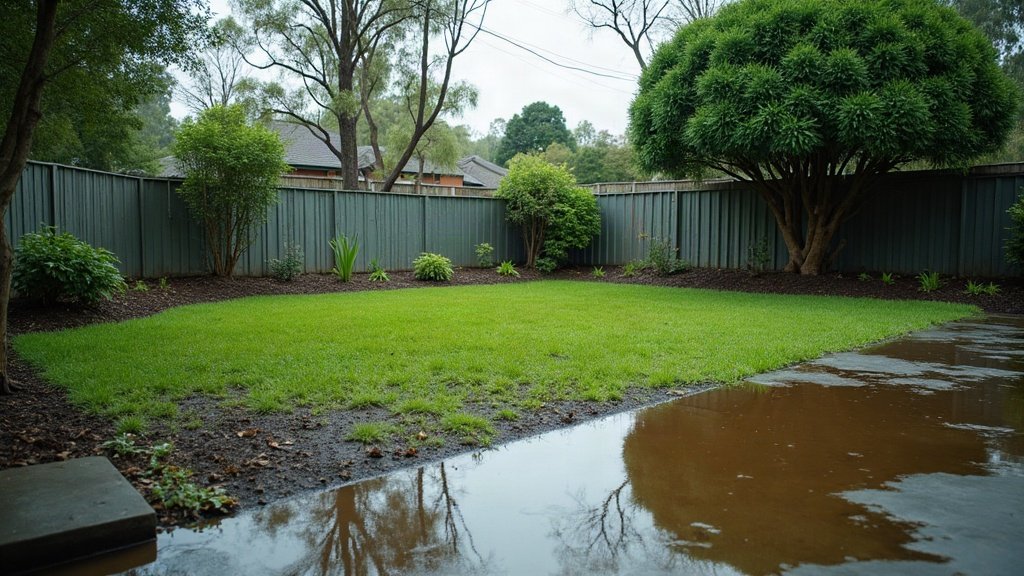
Fixing a Soggy Backyard: Drainage Solutions That Actually Work
Most soggy backyards aren’t short of drainage pipe. They’re short of fall, or they’re sitting on ground that won’t let water through, and a trench of ag pipe fixes neither. Work out which of four problems you’ve got before you spend a cent, because the fix for one does nothing for the other three.
Four problems that all look the same from the back door
Standing water is a symptom. The cause is usually one of these, and they behave differently enough to tell apart by watching.
- Surface water: rain that lands on the yard, or runs onto it from higher ground, with nowhere lower to go. It puddles within minutes and clears within a few hours once the rain stops.
- Roof and stormwater: a downpipe tipping onto lawn, or a cracked or blocked stormwater line surcharging underground. One downpipe can unload a whole roof section onto a single square metre of grass.
- Soil that won’t drain: clay, or a compacted layer under the topsoil, often left by the builder’s machinery. The puddle stays a day or more and a spade brings up sticky, sour-smelling ground.
- Groundwater: water moving sideways through the ground off a slope or an uphill neighbour. The area stays soft for weeks and weeps when it hasn’t rained for days.
Plenty of yards have two at once. The point isn’t to pick one and commit, it’s to stop guessing.
Go and stand in it while it’s raining
This is the most useful thing you’ll ever do about a wet yard, and it costs nothing. Put a jacket on during the next decent downpour and watch where water comes in, where it travels and where it stops. People describe the puddle accurately and the source not at all, because they only ever look afterwards.
Then check the fall. Run a string line from the house to the boundary, get it level, and measure down to the ground every couple of metres. You want ground that drops away from the building. A yard that’s dead flat, or falls back towards the slab, is the problem, and no pipe out-argues gravity.
Then test the soil. Dig a hole about 300mm deep in the wet spot, fill it and let it drain away completely, then fill it again. If the second fill is still sitting there hours later, you’ve got a soil problem, and a soakwell in that same ground is a bucket with dirt walls.
The fixes, roughly cheapest first
- Sort the downpipes: get them into the stormwater line properly instead of spilling onto garden or lawn. This alone fixes a lot of wet patches, and it’s the first thing a good drainer checks.
- Regrade for fall: reshape the ground so it runs away from the house towards a low point you’ve chosen. A shovel and a rake handle small areas. Bigger reshaping is a bobcat job.
- Surface drains: a grated channel across the low side of paving, or a shallow swale through lawn, intercepts water before it reaches the spot you care about.
- Subsurface ag pipe: slotted pipe laid to a consistent fall in clean aggregate, wrapped in geotextile, discharging somewhere lower and legal. The wrap isn’t optional. Without it the fines wash in and the line silts up.
- Fix the soil: core aeration and bulk organic matter open up compacted ground over time. Gypsum only helps dispersive clay, so test first. Drop a dry crumb of soil into a glass of clear water. If it clouds the water around it, gypsum will help. If the crumb just sits there, it won’t.
- Plant the low point: a rain garden, or a bed of species that tolerate wet feet, turns the worst corner into the part that’s meant to be wet. It’s the cheapest honest answer when there’s nowhere lower to send it.
- Change the surface: permeable paving, open-jointed pavers or gravel over a free-draining base let water through instead of shedding it elsewhere.
Things that look like a fix and aren’t
Sand spread over clay is the classic. The sand fills up and holds water on top of the clay, so now you’ve got a wet sponge instead of a puddle. Improve heavy soil with gypsum and organic matter instead, and be patient.
Laying synthetic turf over a wet base drains nothing either. It hides the mud and traps the smell. Sort the base first, which goes for paving too.
And a soakwell only works where the surrounding ground can accept water. Dig one into clay and you’ve built a storage tank that fills in the first storm and stays full until it evaporates.
Where the water is allowed to go
No council lets you collect water and send it onto a neighbour’s land. That’s what homeowners get wrong most often, and it’s how a drainage job becomes a fence-line dispute.
Water sitting against the house matters more than people think. Persistent moisture at the slab edge or under a deck brings rot, termite pressure and mould on paving and pool surrounds that keeps returning however often you clean it. If the wet patch is within a metre of the building, treat it as urgent.
Connecting new drainage into the legal stormwater point is licensed work. Who can do it, and what you’re allowed to connect to, is set by your state’s plumbing regulator and your local council, so confirm with them before anything goes in the ground. Check for easements and buried services too. Before You Dig Australia is free.
When to stop and get a drainer in
Shifting topsoil, extending a downpipe and planting a wet corner are reasonable weekend jobs. Hand it over once the work touches the stormwater connection, an easement, a pool shell or structural footings. Trenching close to a retaining wall is another to leave alone, because the drainage behind that wall is holding it up.
And get someone out during or just after rain if you can. A drainer standing in a dry yard is working off your description. One standing in it while the water moves can see the answer.