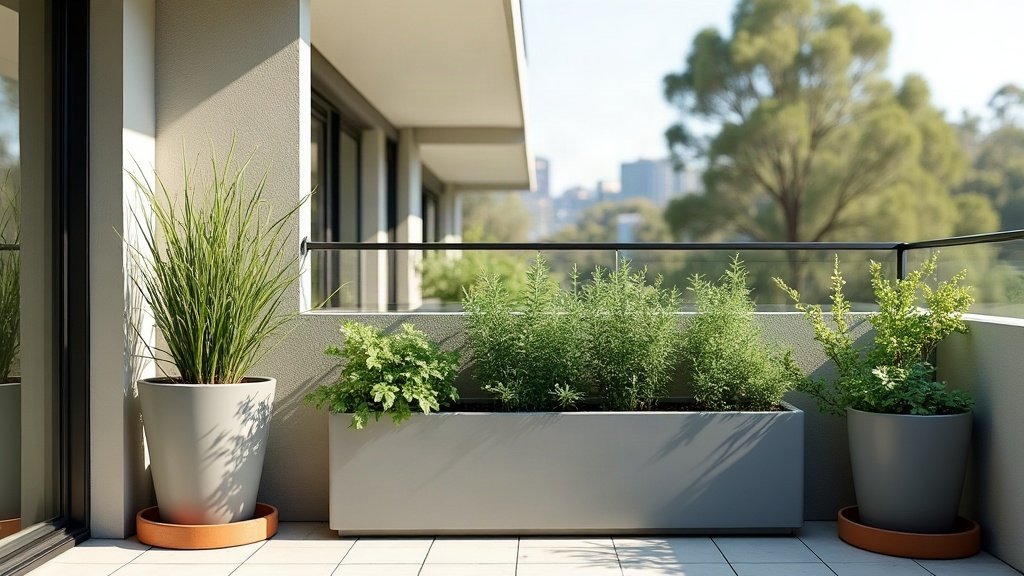
Balcony Gardens for Apartments: Weight, Wind and Watering
A balcony garden works when you sort three things before you buy a single plant: how much weight the balcony and your by-laws will tolerate, how hard the wind hits that corner of the building, and where the water goes once it drains out of the pot.
Start with the paperwork, not the nursery
Read your building’s by-laws first. NSW Government guidance on strata by-laws says balcony by-laws can cover what you’re allowed to put on the balcony and how it has to be maintained, and every scheme is different. Victoria (owners corporations) and Queensland (body corporate) run similar systems, so the same check applies wherever you live.
The things worth asking your strata or building manager about:
- Planter size and weight: some buildings cap pot sizes or ban large planter boxes outright.
- Anything fixed to walls or balustrades: in NSW, small fixings like hooks and screws count as cosmetic work that needs no approval, but only where they don’t affect the structure or the outside of the property, and your by-laws can add to that list. Renters need the landlord’s written permission before making changes. Ask before you drill.
- Hanging baskets over the edge: ask whether your by-laws cover anything that hangs beyond the balustrade.
- Floor waterproofing: ask whether there’s any history of membrane problems before you park wet pots on the tiles.
On load, nobody can tell you a safe number for your balcony from a blog post. If you’re planning anything big, like a long planter box full of soil, a water feature or a cluster of large pots in one corner, ask the strata manager whether the building has structural information on file, and get an engineer’s opinion before it goes in. Saturated potting mix is a lot heavier than the dry bag you carried up in the lift.
Pots and potting mix: lighter is better
The easiest weight saving is the pot itself. Glazed ceramic and concrete look terrific and weigh a tonne. For anything bigger than a herb pot, I’d go with:
- Fibreglass or polyethylene: they look like stone or ceramic for a fraction of the weight, and they don’t crack in a cold snap.
- Fabric grow bags: cheap, light and good for veggies, though they dry out fast in summer.
- Self-watering pots: the reservoir in the base buys you a couple of extra days in hot weather, which matters when you’re away.
Use a premium potting mix, never garden soil. Soil from a backyard packs down in a pot, drains badly and gets heavy when wet. Don’t put a layer of gravel in the bottom either; it doesn’t improve drainage and it adds weight. Spread the load by using a few medium pots rather than one huge pot.
One safety point that has nothing to do with plants: keep pots, planters and furniture back from the balustrade so a child can’t use them as a step. And never sit a pot on the top rail or a ledge. One decent gust and it’s in someone’s car park.
How bad is the wind up there?
Higher floors, corner balconies and anything facing the coast cop the most wind. Spend a week noticing which way the gusts come from and where the calm pocket is. That pocket, usually tucked against the wall, is where your softer plants go.
Plants that handle exposed balconies well:
- Coastal rosemary (Westringia): tough, clips into a neat shape and shrugs off salt and wind.
- Lomandra and Dianella: strappy natives that bend instead of snapping.
- Woody herbs: rosemary, thyme and oregano actually prefer a lean, breezy, sunny spot.
- Succulents: fine in full sun and wind as long as the pot drains freely.
- Correa: a compact native with winter flowers for the birds.
Skip anything with big, soft leaves like monstera or tall tomatoes on a windy balcony. They tear and topple. If the wind is relentless, a low row of hardy plants on the windward side will shelter the rest, which beats bolting up a screen your by-laws might not allow. For balconies where screening is permitted, our guide to privacy screening ideas covers the options. For growing up rather than out, see the vertical garden guide.
Watering without upsetting the people below
Drips are easy to fix. Every pot should sit in a saucer that’s wide enough to catch what drains out. Water slowly at the base of the plant until you see the first trickle come out the bottom, then stop. Tip out saucers after a day so they don’t breed mosquitoes.
A few habits that help:
- Water early in the morning: plants get a drink before the heat and the balcony dries before anyone downstairs is out.
- Keep the floor waste clear: potting mix and fallen leaves washed into the balcony drain can block it.
- Check the mix, not the calendar: push a finger in up to the second knuckle. Dry means water; damp means leave it.
- Use a watering can, not a hose: you control exactly how much goes in.
Pots on a sunny, windy balcony can need water daily in summer and once a week in winter. Self-watering pots and a layer of mulch on top of the mix both slow that down.
What to grow first
For a first season, keep it simple: a trough of herbs you actually cook with, one or two hardy natives in good-sized pots, and a self-watering pot of lettuce or rocket if you get at least five or six hours of sun. See how it goes through one summer before adding more. Our herb garden guide covers which herbs to start with, and if you’re furnishing the space too, the weatherproof outdoor furniture guide will help you pick pieces that survive the same wind your plants do.