Setting Up a Backyard Fire Pit Zone Safely
Put a fire pit in the wrong spot and everything else you do afterwards is damage control. Before you buy anything, walk out into the yard and find a place where a fire can sit with nothing burnable overhead and a few metres of clear ground on every side. That one decision does more for safety than any accessory you can bolt on later.
Start with the spot, not the pit
Every unit comes with its own clearance figures, so read the manual that lands in the box. As a working rule of thumb, give yourself at least three metres of clear ground all the way around and nothing at all above it. The things that catch people out are the ones they stopped noticing years ago:
- Pergola beams and shade sails: radiant heat and embers travel straight up, and shade cloth sags, melts or ignites well before you smell trouble.
- Low gum branches: they hang lower than you remember once a breeze gets into them, and dry eucalypt litter lights in seconds.
- Timber fences and privacy screens: a paling fence a metre and a half away scorches and dries out across a single season even if it never catches.
- Gas bottles and the barbecue: keep the cooking area and the fire area separate, ideally with a walkway between them.
- The house wall and eaves: eaves trap heat and hold smoke against the cladding.
Think about where the smoke lands too. If the prevailing wind carries it into your neighbour’s bedroom window, you will hear about it by the second weekend.
What it sits on matters more than people think
A fire pit on lawn kills the grass under it and leaves a dead circle for months, and on a hot day the heat carries down through dry thatch and smoulders sideways. Timber decking is the one to avoid entirely unless the manufacturer specifically approves it with a heat shield, and even then most decks are not worth the risk.
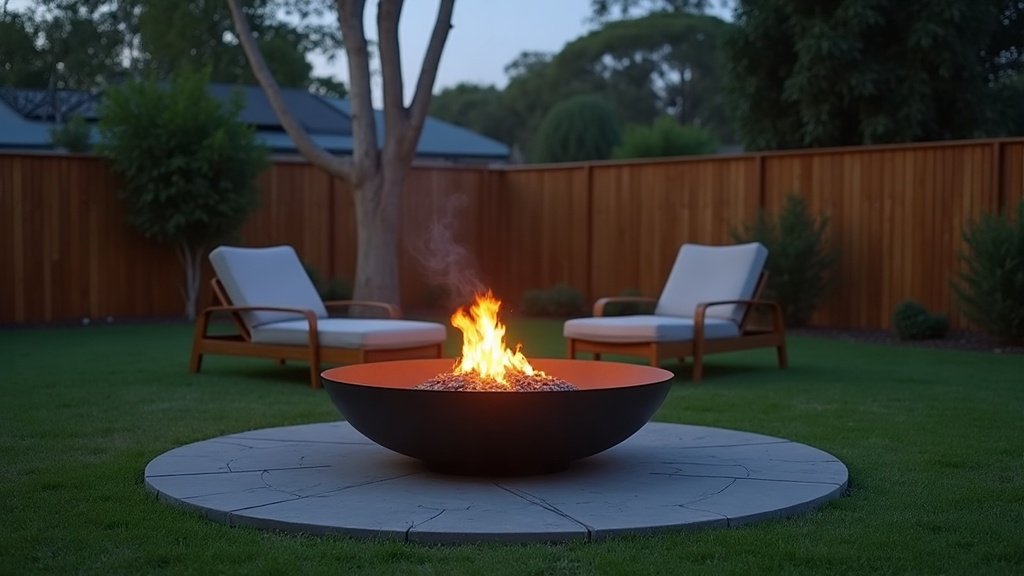
What works is a non combustible base with a bit of size to it. Concrete pavers, clay or brick pavers, crushed granite or a poured slab all do the job. Make it wider than the pit by a good margin so anything that pops out lands on stone rather than grass, and two metres across is a sensible minimum for a standard bowl. If you are choosing pavers, read up on how to clean outdoor pavers first, because soot marks some finishes permanently. Level it properly too, since a bowl sitting on a lean tips coals to the low side.
Airflow, fuel and less smoke
Smoke is mostly a fuel problem. Green or damp wood cannot burn cleanly, so it smoulders and pours out white smoke instead of heat. Dry seasoned hardwood, split reasonably small, burns hot and clean and gives you a fire people will actually sit around.
Keep the airflow open. Pits with vents at the base need those vents clear, and one choked with last month’s ash will smoke badly no matter what you feed it. Never use petrol, methylated spirits or starter fluid to get things going, and do not burn treated pine, painted timber or pallets. Those offcuts release genuinely nasty stuff into air everyone around the pit is breathing.
The rules you actually have to check
During a declared Total Fire Ban, a wood fire is out. The NSW Rural Fire Service states it plainly: a barbecue or wood fired pizza oven that uses solid fuel such as wood, charcoal or heat beads cannot be used outside during a Total Fire Ban. Gas and electric units can still run under conditions, including a responsible adult present the whole time and no combustible material within two metres. Gas units also need an immediate and continuous supply of water, and must be within 20 metres of a permanent private dwelling or in an approved designated picnic area.
That is the NSW position. Every state and territory has its own fire authority setting its own rules, so check the one that covers you: the Country Fire Authority in Victoria, the Queensland Fire Department, the Country Fire Service in South Australia, DFES in Western Australia, the Tasmania Fire Service, and the equivalent service in the ACT and Northern Territory. Check whether a permit applies during your area’s declared bush fire danger period as well, because that season carries its own requirements separate from total fire bans.
Councils sit on top of all of that. Local rules on open fires and smoke nuisance vary a lot, and some councils restrict backyard fires outright or want approval first. One phone call settles it.
Putting it out properly
Letting a fire burn down and going to bed is how a pit is still hot at ten the next morning. Stop feeding it about an hour before you head inside, then drown it with water, stir the ash through with a metal poker or shovel, and drown it again. You want no hiss, no steam and no warm spots when you hold a hand above it.
Do not bury live coals in sand and walk off. Sand insulates them, and buried coals stay hot enough to burn bare feet the next day. Put cold ash in a metal bin, not a wheelie bin.
The five minute check before you light
Run the same short check every time and it becomes automatic. Total fire ban status for your district, checked that day. Wind, because anything gusty is a night for the heater instead. Nothing overhead. Base swept clear of leaf litter. A charged hose or full bucket within arm’s reach. Kids and dogs briefed on where the line is.
Get the placement and the base right at the start and a fire pit is what keeps the yard usable through winter. Plan the fire zone alongside the rest of the space, particularly if you already have an outdoor cooking zone mapped out, so the two work together instead of fighting for the same corner.