Vertical Gardens and Green Walls for Small Backyards
A small backyard or a tiled courtyard does not have to mean a bare backyard. Going vertical, up a wall, a fence line or a freestanding frame, is how you fit a proper amount of green into a footprint that would only ever hold two or three pots on the ground. Done well it also solves the other small-yard problem: privacy without eating floor space. This is a practical look at the structures, the drainage question that kills most setups, and what actually survives an Australian summer against a hot wall. If the rest of your yard still needs a plan, start with our complete guide to planning an Aussie backyard.
Heads up: one link below goes to a product on Amazon, and we may earn a small commission if you buy through it, at no extra cost to you. We only point at gear we would genuinely use.
The three ways to go vertical
Vertical gardening covers a wider range of setups than people expect, and picking the wrong one for your space is the most common early mistake.
- Freestanding trellis or A-frame: a panel or frame in a garden bed or large pot that takes a climbing plant. Easiest option, no wall fixing, and it can be moved if you get the spot wrong first time.
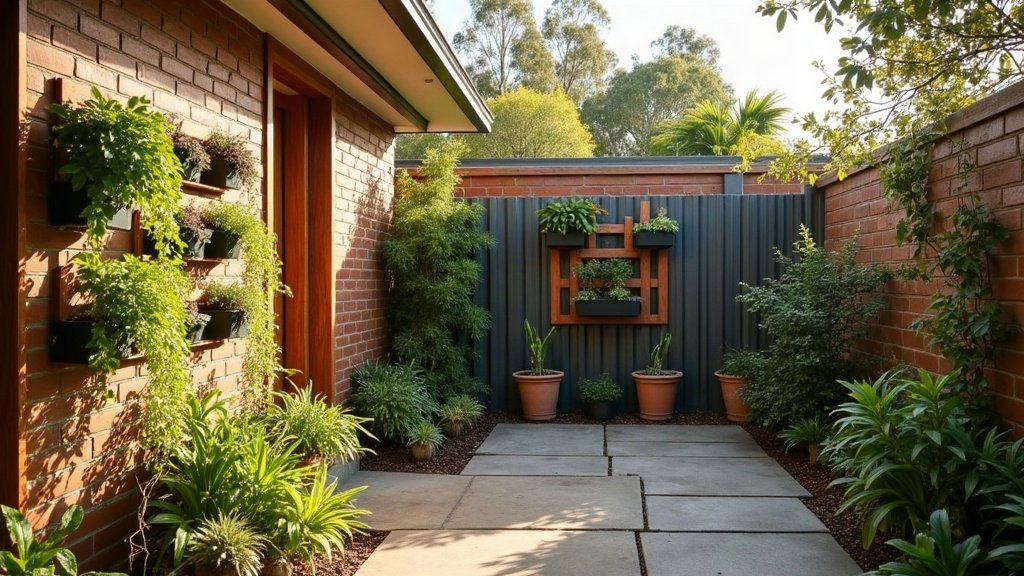
- Wall-mounted pocket or module system: individual planting pockets bolted to a fence or wall, each holding its own small root zone. Good where you have a blank vertical surface and no bed at the base.
- Built-in green wall: an irrigated panel system plumbed into a permanent water line, usually reserved for bigger courtyards or a designed feature wall. Most small-yard jobs do not need to go this far.
For a first vertical garden, start with a trellis or a modular wall planter. They are cheap to get wrong and cheap to fix, which a plumbed-in wall is not.
Drainage is where most of these fail
Ground gardens get a bit of grace on drainage because water has somewhere to go. A wall planter does not. Water sits in the bottom of a pocket, the roots sour, and the plant looks fine for a month before it collapses all at once. Before you fix anything to a wall, check two things: each pocket or module actually has a drainage hole, and whatever is below it, paving, decking, a rendered wall, can cope with water dripping out of it for years.
Run a saucer, a gravel tray or a narrow drip strip under the base row so runoff does not stain render or pool against timber decking. A hanging pocket planter such as the Gardeningwill hanging vertical wall planter is a low-risk way to trial a wall before committing to anything permanently fixed, since it hangs off an existing rail or fence top rather than needing holes drilled into a wall.
Sun, aspect and the heat a wall throws back
A vertical bed against a north or west-facing brick or Colorbond wall runs hotter than the same plant in open ground, because the wall soaks up heat through the day and radiates it back out into the evening. Factor that in before choosing plants:
- North and west walls: a hotter microclimate than the rest of the yard, so lean toward tougher, drought-tolerant species even if the rest of the garden does not need them.
- East and south walls: milder and more forgiving, better suited to ferns and other plants that would scorch on a hot wall.
- Pale render or light-coloured Colorbond: adds a further notch of reflected heat on top of the aspect itself.
What actually holds up vertically
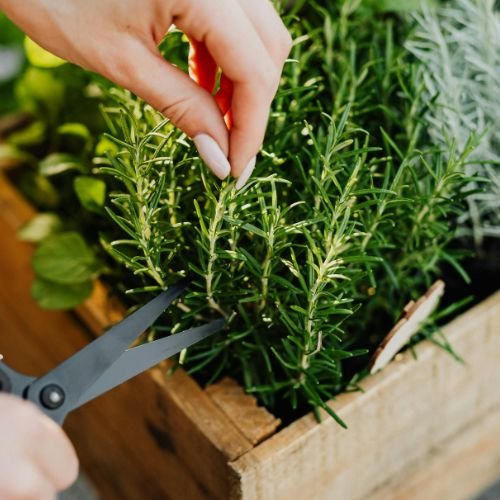
Not every plant that looks good in a nursery photo copes with a shallow root zone and gravity working against it. Trailing natives such as dwarf hardenbergia and native violet do well in modules with limited soil depth. Tougher Mediterranean herbs like rosemary, thyme and oregano suit a sunny wall pocket because they are built for exactly this kind of lean, fast-draining spot. For a shadier wall, ferns and strappy dwarf lomandra handle the lower light without stretching and going leggy. Avoid anything with a deep taproot or a mature size that outgrows a shallow module. It will either stall or split the planter trying to fit.
Watering a vertical bed properly
Shallow root zones dry out faster than a garden bed, so a wall planter usually needs watering more often than the same plant on the ground. A drip line clipped along the top row, feeding down through each pocket, beats hand watering with a hose because it delivers the same amount to every pocket instead of soaking the top row and starving the bottom one. If you want the full rundown on drip kits and timers, we cover that in the backyard irrigation guide. Check your water authority’s current restrictions before setting a schedule, since the rules vary by state and by season.
When it stops being a weekend job
A trellis, a hanging planter or a bolt-on modular system is genuinely a DIY afternoon. Where it tips into a bigger job is when you want a green wall built into the structure itself, irrigation lines run inside a rendered feature wall, or planting integrated into a new deck edge or courtyard boundary as part of a larger renovation rather than bolted onto an existing wall. That is design and construction work, not a bracket-and-screws job, and worth getting quoted properly rather than retrofitting a DIY system onto a wall never built to carry the weight or hold the moisture.
Start small and prove it works
The sensible order is one trellis or one modular section first. Watch how it drains and how the plants handle the aspect through a full season, then scale up once you know the spot works. A green wall that fails is usually one planned as a big statement piece before anyone tested whether that wall, in that light, could actually support it.