Building a Backyard Play Zone That’s Safe and Actually Lasts
A good backyard play zone comes down to three things: sun, surface and equipment that survives the weather. Get those three right first, and the fun stuff like a cubby house or a slide is easy to add on top. Get them wrong, and you’re rebuilding it in eighteen months. It’s really just one more zone in the backyard to plan properly, in the same way you’d think through the rest of an Australian backyard as connected zones.
Start with where the sun actually falls, not just where there’s space
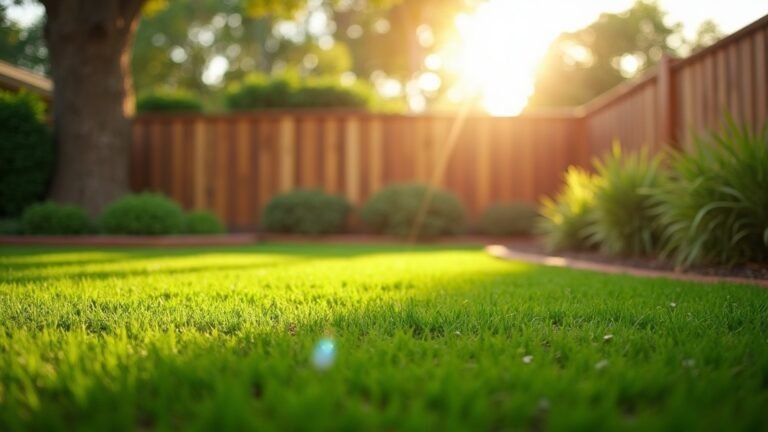
Most people plan a play zone around the flattest bit of lawn or the spot furthest from the garden beds. Better question: where does the sun sit at 10am, at midday and at 3pm, across summer and winter? A north or east-facing spot gets gentle morning light and shade later in the day, which is exactly what you want for outdoor play in an Australian summer. A west-facing zone cops the harsh afternoon sun, and metal slides or dark plastic equipment can genuinely get too hot to touch by early afternoon.
Watch the space for a day or two before you commit. Note where the shade from the house, fence or an established tree actually lands through the afternoon, and build around that rather than fighting it with shade cloth after the fact.
Soft-fall surfaces: what actually cushions a fall
Grass alone doesn’t cut it under climbing equipment or a swing, especially once the ground compacts and the grass dies back to bare dirt. The common options, roughly cheapest to most expensive:
- Coarse sand: cheap and forgiving, but tracks into the house and needs raking to keep it level and free of debris.
- Bark or wood-chip mulch: good cushioning and a natural look, but breaks down over time and needs topping up.
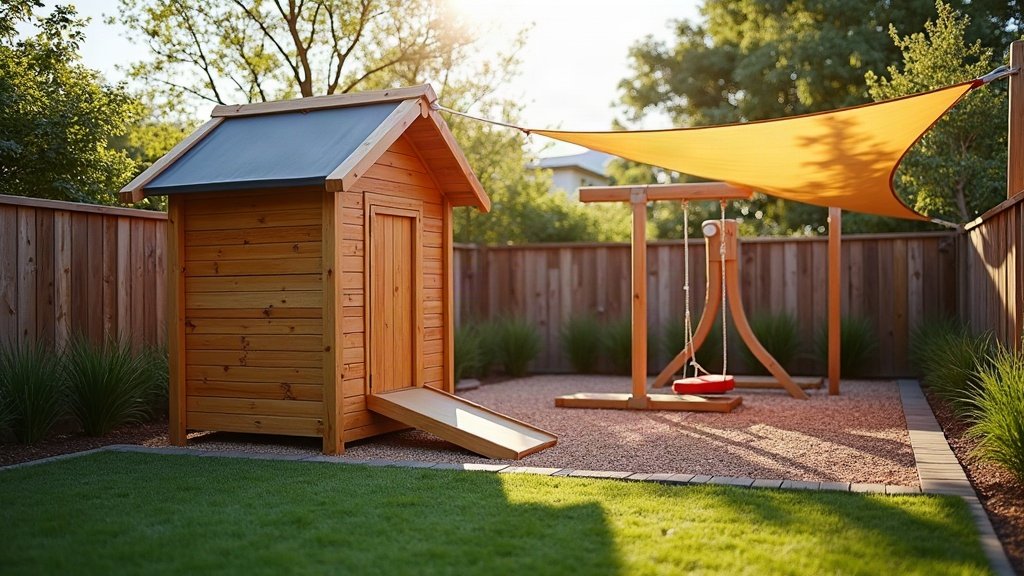
- Rubber softfall mulch or tiles: the most durable and lowest maintenance option, and what most commercial playgrounds use, but the highest upfront cost.
Whatever you choose, depth matters more than the material. A thin scatter of anything does almost nothing to cushion a fall from height. Build it up properly under and around the fall zone of any climbing equipment or swing, not just directly beneath it.
Choosing equipment that survives Australian weather
Timber play equipment needs to be a hardwood or a treated pine rated for outdoor ground contact, not a soft or untreated timber that will rot or warp within a season or two. Powder-coated steel holds up better than raw metal, which rusts fast near the coast. Plastic equipment fades and gets brittle in UV over a few years regardless of brand, so treat bright colours as a look you’ll be replacing eventually rather than a permanent feature.
Check the fixing hardware too. Cheap swing-set kits often ship with fittings that corrode within a year. If you’re building or extending anything yourself, use hot-dip galvanised bolts and brackets, and check them every season, because a loose fitting on climbing equipment is where things actually go wrong.
Fencing, sightlines and keeping it visible from the house
Position the play zone where you can genuinely see it from the kitchen or the main living area, not tucked around the side of the house where you’d need to walk out to check on anyone. If the yard backs onto a pool, a driveway or a busy street, that boundary needs to be properly fenced and self-latching well before anything else gets built. Pool-fencing rules are strict and vary by state and council, so if a play zone sits anywhere near a pool boundary, check your local council’s current requirements before you finalise the layout.
Shade, hydration and heat on hot days
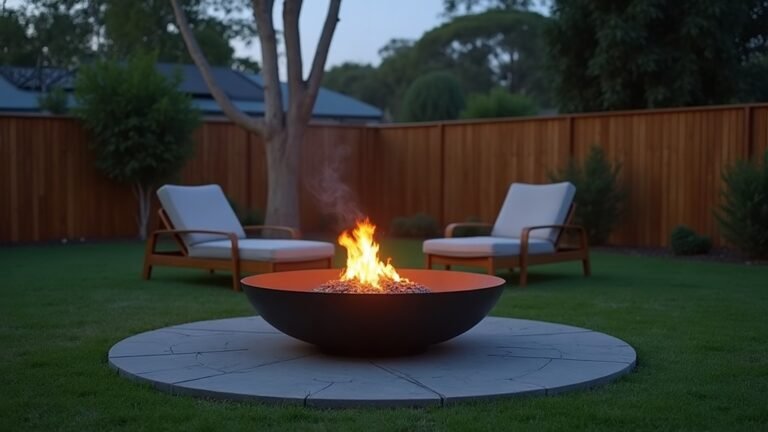
A single well-placed shade sail or the canopy of an established tree does more for a play zone’s usability than almost anything else on this list, the same way getting shade and airflow right made all the difference in setting up a backyard fire pit zone safely. It keeps the soft-fall surface cooler underfoot, keeps equipment from becoming a burn hazard, and means the space actually gets used through summer instead of sitting empty from 11am to 4pm. If you’re running shade cloth or a sail, check the fixing points are rated for the sail’s size and your local wind exposure, because an undersized fixing is a common failure point.
Movable extras vs a permanent build
A sandpit, a portable cubby, a trampoline or a set of balance beams can go in this weekend with basic tools. A permanent structure with in-ground footings, like a fixed fort or an elevated platform, is a different job: footing depth, drainage and sometimes council approval come into play depending on the size and your local regulations, so check with your council before you dig. If you’re already planning bigger backyard works around the same time, it’s worth raising the play zone with whoever’s managing that project so the two don’t end up fighting each other for space or drainage falls.
Keeping it safe as it ages
A play zone isn’t a set-and-forget job. Walk it every few months: check for splinters and cracked timber, test that swing chains and fittings haven’t stretched or corroded, top up soft-fall material that’s compacted or washed away, and look for weak spots where grass has worn through to bare, hard ground. Most injuries on home play equipment come from wear that crept in slowly, not from a design flaw on day one. A quick seasonal check catches almost all of it before it becomes a problem.
Done properly, a backyard play zone earns its keep for years rather than one summer. Sun, surface and weather-proof equipment first, everything else is easy to add once those fundamentals are right.