Choosing and Siting a Garden Shed
Most backyard sheds end up in the wrong spot. Not because the owner didn’t think about it, but because they thought about it after the shed was ordered. Size, material and position are one decision, not three.
Work out the size before you look at a single shed
Start with what’s going in there, then add a walking lane. The mistake is buying to fit the gap in the yard rather than the contents, then only loading from the doorway.
Lay it out on the lawn with a tape and some pegs, and mark each of the big items:
- Mower and whipper snipper: floor space plus room to wheel out without shuffling everything.
- Bikes: upright storage eats wall, not floor, so decide early if you’re hanging them.
- Bagged goods: potting mix, fertiliser and pool chemicals belong off the ground.
- Workbench: a whole extra metre of depth, and nobody retrofits it comfortably.
Whatever you land on, go one size up. Sheds fill, and the extra cost now beats a second shed later.
Timber or steel: what actually decides it
Steel wins on cost, speed and termites. Timber wins on looks and on being easy to modify. The rest is detail about your block and your climate.
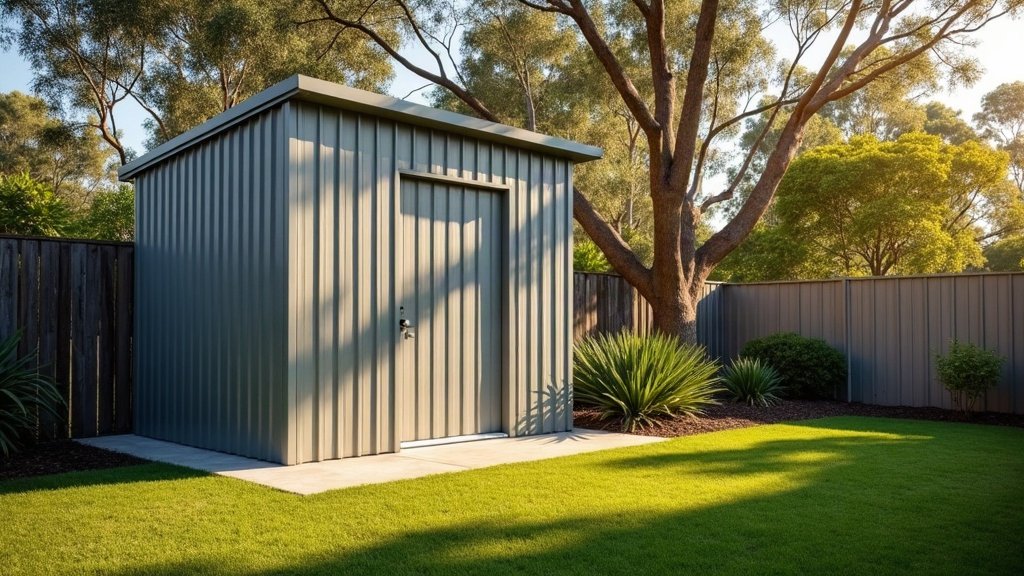
A steel or Colorbond shed goes up in a weekend, doesn’t need coating, and gives white ants nothing to eat. The trade-offs are real though: steel sweats in humid climates, so condensation drips onto whatever is underneath unless there’s ventilation and a barrier under the floor. On the coast, salt air is hard on cut edges and fixings, so ask about coating grade.
Timber suits a garden where the shed is meant to be seen. You can cut into it, hang heavy things off the studs, and line it without much fuss. The cost is maintenance: it wants a recoat on a schedule, and any timber in ground contact needs to be rated for it. In a termite-prone area, a timber shed on a timber base is a risk you manage actively.
Where it goes matters more than what it’s made of
Position is the decision people regret. Walk the block at different times of day first: the spot that looks obvious at 10am is often wrong.
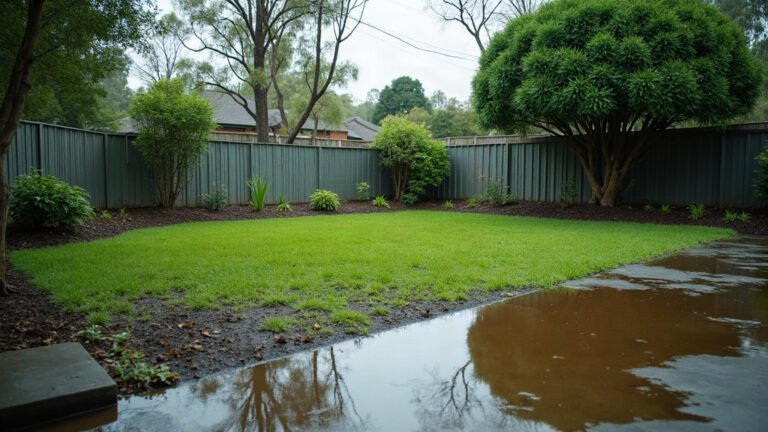
- Water: stand in the yard after heavy rain and see where it sits. A shed in the low point has a damp floor for life, so sort the drainage first.
- Access: can you get a wheelbarrow or a trailer to the door, or are you carrying everything around a garden bed?
- Sun: a steel shed in full western sun turns into an oven by afternoon. Shade from an existing tree helps.
- Trees: what’s overhead now will be bigger later, and dropped limbs land on roofs. Established trees have root zones you shouldn’t excavate through.
- Services: know where water, gas, sewer and any underground power runs before anyone digs. Before You Dig Australia exists for exactly this.
One thing catches people out. If a side of the shed will sit tight against a boundary fence, deal with the fence first. Once the shed’s up, that panel is gone and you won’t get a sander in there again. So if the fence is due for a coat or a stain, book it in before the shed arrives. Easy Cut Painting cover fence painting and staining across Sydney’s Hills District and North-West Sydney.
What you need to check with your council
Small garden sheds are often exempt from approval, but the thresholds are set at state and council level and they aren’t the same everywhere. Floor area, wall height, boundary setbacks and street setbacks all vary, and so do the rules for bushfire-prone land, heritage overlays, flood zones and easements.
Ring your local council before you buy, and check the by-laws too if you’re in a strata or community title property. Your state’s building authority can confirm what class of structure you’re dealing with. It’s a ten minute call, and cheaper than moving a shed that’s bolted down.
The base is the part people skimp on
A shed is only as good as what it sits on. A slab is the best option: level, dry, and solid to anchor to. Pour it a touch larger than the shed footprint so water runs away from the walls instead of pooling at the base.
If a slab isn’t in budget, a compacted bed with pavers or a treated timber bearer frame will do, as long as it’s dead level and drains. Sitting a shed straight on dirt won’t. Anchoring matters too: wind gets under a light shed and lifts it, so fix it down with the manufacturer’s brackets.
Power and light
If you want power out there, plan it before the slab goes down. Running a cable to a shed is electrical work, so it’s a licensed electrician’s job, and a permanent supply to an outbuilding is not an extension lead out the laundry window. If you’re not wiring it, a window or a clear roof sheet gives daylight without much heat load, and a solar sensor light outside makes the night walk down the yard less annoying.
Common questions
Does a garden shed need council approval in Australia?
Sometimes. Many councils exempt small sheds below a certain floor area and height, but the thresholds and boundary setbacks differ by state and by council. Check with your local council before you buy.
How do I stop condensation in a steel shed?
Ventilation and a barrier between the ground and the shed. A sealed slab, vents high and low, and not storing wet gear inside all help. An insulated roof blanket is worth asking about.
Get the size and the spot right and the rest is straightforward, and it’s the same thinking that runs through planning the rest of the backyard. Spend the extra hour walking the yard before you order, and the shed will still be in the right place long after you’ve forgotten the price.