Termites And Garden Timber: Choosing Hardwood That Lasts For Decks, Sleepers And Garden Beds
Termites eat hardwood, and the timber in a garden is where they usually find it first. Deck posts, sleepers, garden edging, raised beds and old stumps all sit on or close to damp soil, which is exactly what subterranean termites are looking for. Some timbers hold out for decades in those spots. Others break down in a few years.
Here’s which part of the timber termites go for, which timbers last longest in the ground, and when it’s time to get the yard checked.
Do Termites Eat Hardwood In The Garden?
Yes. Termites live on cellulose, and every timber is made of it, hard or soft. The part of a hardwood log termites struggle with is the heartwood. Termites feed mostly on the sapwood, the paler outer band of the log, because the heartwood in the middle tends to be harder and, in some species, carries natural compounds termites avoid.
That’s why two sleepers cut from the same species can age so differently. A board that’s almost all heartwood can last for many years in the ground. A board with a strip of sapwood down one edge has a weak spot, because untreated sapwood of any species sits in the lowest natural durability class.
Which Timbers Last Longest In Garden Soil?
Timber sold in Australia is given a natural durability class from 1 (most durable) to 4 (least), and timber in contact with the ground is rated separately from timber kept above it. For anything that touches the soil, the in-ground class is the number to ask about.
- Class 1 in the ground: the hardwoods ironbark, tallowwood, turpentine and coast grey box. Heartwood in this class is expected to last 25 years or more in soil.
- Class 2 in the ground: the hardwoods spotted gum, blackbutt, jarrah and river red gum, plus white cypress, a native softwood. Expect roughly 15 to 25 years in soil.
- Class 3 in the ground: the hardwoods brush box and Sydney blue gum, at about 5 to 15 years.
- Class 4 in the ground: the hardwoods Tasmanian oak and Victorian ash, and the softwood radiata pine, at 5 years or less.
Above ground the picture improves. Spotted gum, blackbutt, white cypress and merbau all rate Class 1 for outdoor timber kept off the soil, and spotted gum, blackbutt and merbau are all used for decking.
Termite resistance is rated separately again. Among the hardwoods, ironbark, spotted gum, jarrah, tallowwood, merbau, blackbutt and turpentine heartwood are rated termite resistant, and so is white cypress. Sydney blue gum, Tasmanian oak and Victorian ash are rated not resistant, so they’re better kept for jobs well away from the soil.
Garden Timber That Touches The Soil Needs The Most Care
Subterranean termites need moisture, and they travel up from the ground to reach their food. These are the pieces of the garden to check first:
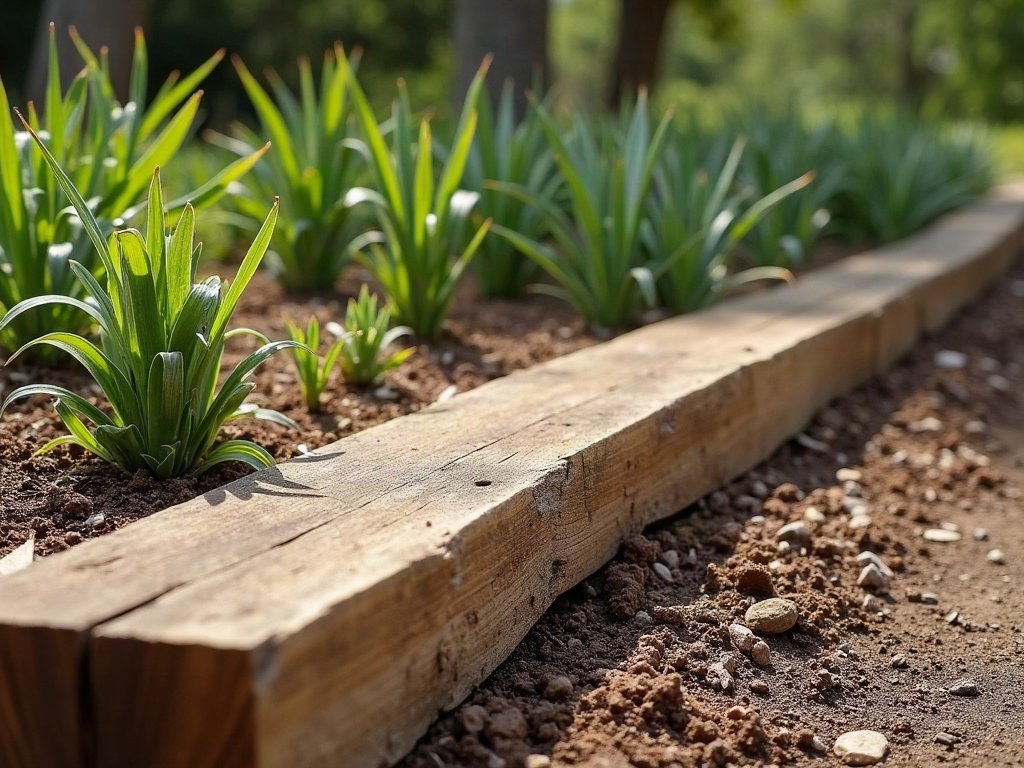
- Sleepers used for garden edging, steps and low retaining walls.
- Raised garden bed frames, especially where the soil inside stays wet.
- Deck posts, bearers and the lowest decking boards.
- Fence posts and the bottom rails of timber fences.
- Old tree stumps, buried offcuts and timber left lying in the yard.
Coptotermes, one of the main groups of termites that damage buildings, nests in old stumps and in trees, especially eucalypts. That’s one more reason to get rid of old stumps near the house.
Treated Pine Or Hardwood For Sleepers And Garden Beds?
Either can work in the ground, as long as it’s made for it. Treated pine is widely available and easy to work with. It relies on its preservative, which only soaks properly into the sapwood, and well treated sapwood can outlast some durable hardwoods. For garden beds, edging and landscaping walls, look for pine treated to hazard level H4, the level made for timber in the ground. Structural retaining walls and house stumps call for H5.
A durable hardwood with plenty of heartwood doesn’t rely on preservative treatment, so check its in-ground class instead. A board sold for decking or framing above ground won’t last the same way buried in a garden bed.
How To Keep Termites Away From Garden Timber
- Keep garden beds, mulch and soil from being built up against the house. Leave the slab edge or the base of the wall clear and visible, so any mud tubes (thin trails of dried mud termites build to travel in) are easy to spot.
- Fix dripping taps and leaking irrigation near timber, and make sure water drains away from decks and sheds.
- Stand deck and pergola posts on metal stirrups or brackets where the design allows, rather than setting the timber straight into the ground.
- Remove old stumps, timber offcuts and woodpiles that sit against the house or fence.
- Store firewood off the ground and away from the walls.
Signs Termites Are In The Deck Or Garden
Termites work inside the timber, so damage often looks fine from the outside. Watch for:
- Mud tubes running up deck posts, fence posts, stumps or the side of the house.
- Sleepers or posts that sound hollow when you tap them, or feel soft underfoot.
- Small piles of discarded wings near lights or doors after warm, humid weather.
- Timber that crumbles when you lift a sleeper or move an edging board.
If you find live termites or mud tubes, leave them be. Digging into them or spraying them can scatter the termites, which makes it harder to work out where the colony is.
When To Call A Pest Controller About Termites
Garden timber that’s been eaten can be a sign termites are nearby, so it’s worth having the house looked at as well. A licensed pest controller can inspect the yard and the home, work out where the termites are coming from, and recommend treatment or protection. Book an inspection if you find any of the signs above, if you’re about to build a deck or retaining wall near the house, or if the house hasn’t been inspected in the last year.
In Sydney, a termite inspection from So Pest Off takes in the garden as well as the house, including fences, retaining walls, garden beds near the slab, old stumps and sheds.
Termites And Garden Timber FAQs
Can Termites Get Through A Hardwood Deck?
They can. Hardwood heartwood rated termite resistant holds out longer, but no timber is termite proof, and the untreated sapwood of every species is vulnerable.
Do Termites Eat Garden Sleepers?
They can, especially sleepers sitting in damp soil. Durable hardwood heartwood, or pine treated to H4 or higher, lasts longer in the ground than untreated softwood.
What Is The Best Timber For A Garden Bed That Touches The Soil?
Look for a hardwood rated Class 1 or Class 2 for in-ground use, such as ironbark, spotted gum or blackbutt, or pine treated to hazard level H4.