Outdoor Rugs and Cushions: Choosing Fabrics That Survive Aussie Weather
The word on the swing tag that actually matters is solution-dyed. If the colour went into the fibre while it was still liquid, the sun has to wreck the fibre itself before the colour goes anywhere. If the colour was printed or dipped onto finished yarn, it’s sitting on the surface, and one Australian summer facing west will have it looking tired by autumn. Nearly everything else on the label is softer than that.
Reading the tag instead of the marketing
Outdoor soft furnishings get sold on photographs, so the tag is where you find out what you’re buying. A few terms carry real information. Most don’t.
- Solution-dyed: pigment is mixed into the fibre before it’s spun, so fading is slow and even rather than blotchy.
- A named fibre: acrylic, olefin or polyester, which lets you judge it instead of trusting the word “outdoor”.
- Water repellent finish: a coating that sheds a spilt drink for a season or two, then wears off with washing and sun.
- UV stabilised: real information on frames and hardware, close to meaningless on fabric unless the fibre and dye method are named too.
The three fibres you’re really choosing between
Solution-dyed acrylic
This is the benchmark for cushions, umbrella canvas and anything that lives in unshaded sun. It stays soft, it holds colour hard, and it dries at a sensible rate. It’s also the dearest by a fair margin. Spend the money where fabric cops direct sun most of the day, because that’s the spot that makes cheap fabric look cheap fastest.
Olefin, also sold as polypropylene
Olefin gets its colour in the melt, so it’s solution-dyed by nature. It barely absorbs water, which makes it the sensible pick for rugs and for cushions under a roof or a covered pergola. Its weakness is heat, so keep it away from the BBQ and the fire pit, and think twice about a dark olefin rug on dark tiles in a hot yard.
Polyester
Cheapest, available in every print going, and genuinely fine in the right spot. Outdoor-grade polyester with a decent UV package will hold up under a pergola or on a shaded southern patio for years. Put the same cushion in full western sun and you’ll watch it go chalky, with a pale band where the afternoon shade line falls.
What’s inside the cushion decides how long it smells right
Fabric gets all the attention and the fill does most of the damage. Standard upholstery foam behaves like a sponge. Water gets into the middle, sits there for days, and that’s where the musty smell starts. Quick-dry outdoor foam is reticulated, which means the cell walls have been opened out so water runs straight through and out the bottom.
When you’re checking a cushion, turn it over and look for:
- Drainage: holes, grommets or a mesh panel in the base so water has somewhere to go.
- A cover you can remove: a full zip means you can actually wash it instead of scrubbing at it in place.
- Zip quality: a rust-prone zip on an outdoor cushion becomes a cover you eventually can’t get off.
- Fill type: a plain quick-dry foam core drains fastest, a polyester fibre wrap feels nicer and holds moisture longer.
Worth knowing: mildew generally isn’t feeding on the fabric. It’s feeding on what sits on top of it, which is pollen, dust, sunscreen and salt. Clean fabric that stays wet does far better than dirty fabric that stays wet.
A rug on a deck is also a timber problem
This is the one that costs people money. A rug with a solid rubber or latex backing traps moisture flat against the boards. On timber you get a dark rectangle first, then soft boards underneath, and by the time you notice you’re replacing deck, not rug.
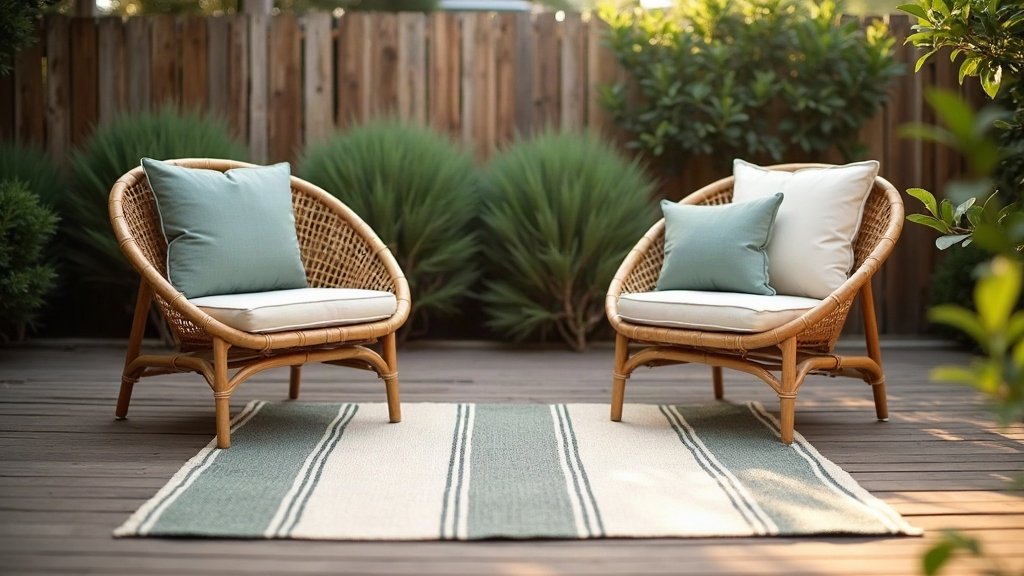
Flatweave polypropylene with an open weave and no solid backing lets the deck breathe and dries after rain instead of holding it. Reversible flat-woven polypropylene mats like this Mokani 150 x 240cm outdoor rug are the shape of thing to look for, because there’s no rubber layer underneath to hold water against the boards. On pavers and tiles the risk is lower, though a rug left wet on sandstone will still mark it and pull salts to the surface.
Either way, roll it up after heavy rain and shift it every few weeks so the surface underneath weathers at the same rate as the rest.
The maintenance rhythm that actually works
Nobody sticks to a complicated routine, so keep it to three habits. Hose the rug and cushions down when you’re watering anyway. Every month or so, give them a wash with mild detergent and a soft brush, then rinse until the water runs clear. And deal with the first mildew spot the week you see it, not next summer.
Two things to avoid. Don’t take a pressure washer to acrylic: it opens the weave and strips whatever repellent finish is left. And don’t stack cushions until both sides are dry. Standing them on edge for an afternoon beats an hour of wiping.
Storing them, and the mistake nearly everyone makes
A sealed plastic tub or an unventilated bench seat box is a mildew incubator: cushions go in looking fine and come out spotted. If you’re using a bench box, get some ventilation into it, whether that’s drilled vents, a slatted base, or simply leaving the lid propped.
Better again, use a breathable storage bag and keep it off a concrete floor, because slab moisture wicks straight up. And before anything goes away for the season, ask yourself one question: is it actually dry, or is it just not obviously wet? Those are very different things.
Buy for the harshest position in your yard rather than the average one, get the fill and the backing right, and keep the fabric clean.
Disclosure: Garden Love is a participant in the Amazon Associates Program and may earn a commission from qualifying purchases made through links on this page.