Clotheslines and Drying Areas: Getting the Placement Right
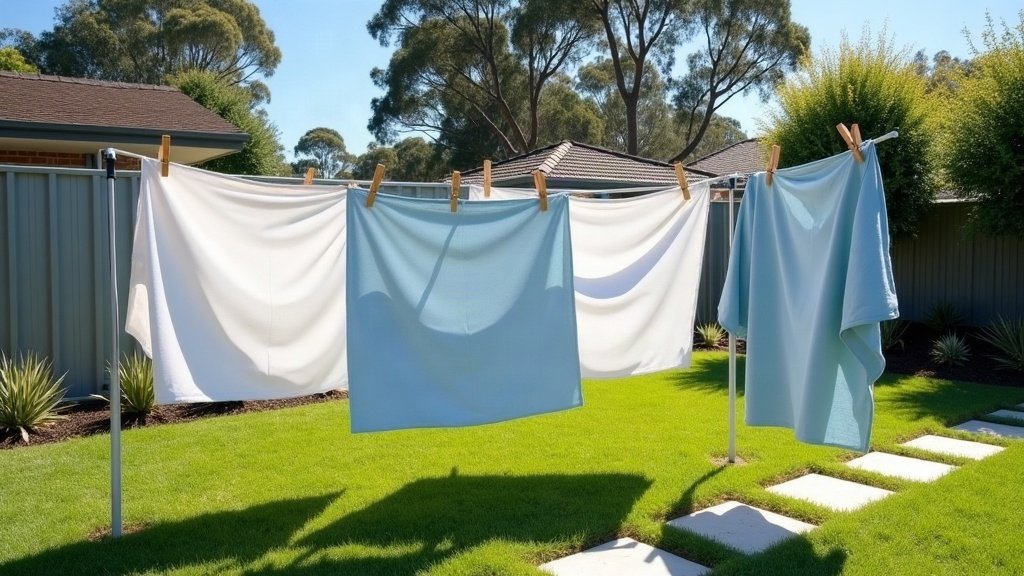
Put your clothesline where it gets morning to midday sun and a steady breeze, close enough to the laundry that you’ll actually use it, and clear of trees, the barbecue and the path everyone walks through. Get those four things right and the type of line you buy matters far less than most people think.
Where should a clothesline go in the backyard?
In most of Australia the north side of the yard gets the most sun across the day, because we’re in the southern hemisphere. A spot that catches sun from mid-morning through to early afternoon will dry a full load on a decent day. Late-afternoon-only sun is weaker, and by then the dew is on its way back.
Sun is only half of it, though. Airflow does just as much work, and in humid coastal areas it often does more. A sheltered corner hemmed in by a fence and a shed can sit in full sun and still leave towels damp at dinnertime. Look for a spot where you can feel the breeze move through, not a dead pocket.
Before you commit, stand in the spot at a few times of day and check for these:
- Trees overhead: leaf drop, sap and birds perched above your washing will undo a clean load fast.
- Smoke and cooking: keep the line away from the barbecue and fire pit.
- Traffic: a line across the main path gets walked into, and wet sheets slapping faces gets old quickly.
- The walk from the laundry: lugging a heavy, wet basket the length of the yard gets old fast.
- What’s underfoot: a paved strip or stepping stones under the line stops you trampling a muddy track through the lawn every wash day.
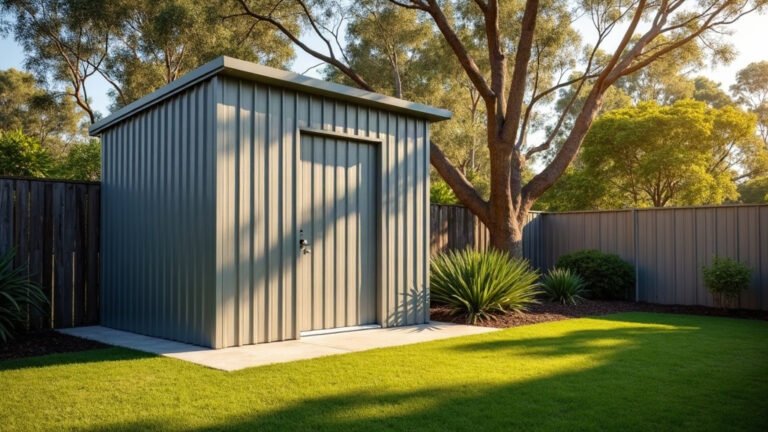
If you’re still planning where other structures go, it’s worth sorting the clothesline at the same time as choosing and siting a garden shed, since both compete for the same sunny, accessible bits of the block.
Rotary, fixed or fold-down: which type suits your yard?
Each style solves a different problem, and the spot you’ve chosen usually makes the call.
Rotary clotheslines
The classic Aussie backyard line. It holds a lot of washing in a compact footprint and you can spin it to hang from one position. The catch is clearance: when the arms are up and the line is loaded, it needs a clear circle around it with nothing to snag on. Put one too close to a fence or a garden bed and you’ll be fighting it every week. Many sit in a ground socket so you can lift the head out for parties.
Fixed and fold-down wall lines
These mount to a wall, a solid fence or between two posts, and fold flat against the surface when you’re done. They suit narrow side yards and courtyards where a rotary won’t fit. The mounting surface has to be up to it. Brick and block walls take proper masonry fixings, while a tired paling fence may not hold a line full of wet towels without some bracing. If the wall faces south, rethink it, because a shaded side path won’t dry much at all.
Retractable lines
A retractable reel on one wall, a hook on the opposite wall or post, and the line pulls across when you need it. They’re the smallest footprint of the lot and disappear completely when not in use. The trade-off is capacity: a handful of lines is fine for a couple, not for a family doing daily loads. Line tension matters too, so pick a model with a proper lock and keep an eye on the line for fraying where it winds in.
What about small yards and courtyards?
In a tight space, think vertical and think undercover. A fold-down line on a sunny, breezy wall usually beats squeezing a small rotary into the middle of a courtyard where it blocks everything else. A retractable line strung across a patio or under a pergola lets you dry on drizzly days, as long as air can still move through.
That last point catches people out. A fully enclosed alfresco keeps rain off but traps humid air. If you’re weighing up a roof over your outdoor area, our pergola, patio and verandah comparison covers which structures leave room for airflow and which box it in.
A slatted panel or a row of screening plants can hide the line without killing the breeze. The backyard privacy screening guide has options that let air through.
Installing it properly
A rotary line usually sits in a concrete footing or a ground socket set in concrete. Get it plumb, because a leaning pole strains the head. Let the concrete cure fully before you hang the first load on it.
Before you dig any hole, find out what’s underground. Before You Dig Australia is the free national service that gives you a single point of contact to request plans of underground infrastructure at your work site, so you don’t have to chase each utility separately. Water, power and gas lines don’t always run where you’d guess.
For wall and fence mounts, match the fixing to the surface and check the manufacturer’s instructions for load and spacing. Rented or in a strata complex? Check your lease or the body corporate rules before drilling into walls or concreting anything in.
Does washing fade in direct sun?
Strong sun can fade dark and bright colours over time. Turn darks inside out and bring them in once they’re dry rather than leaving them out all afternoon. Whites and towels generally cope fine with full sun.
Get the placement right and the clothesline becomes the cheapest, quietest appliance you own. Sun, breeze, a short walk and a clear space around it: tick those off and almost any decent line will do the job.